

Alibaug in the Monsoon: Empty Beaches and a Slow Ferry
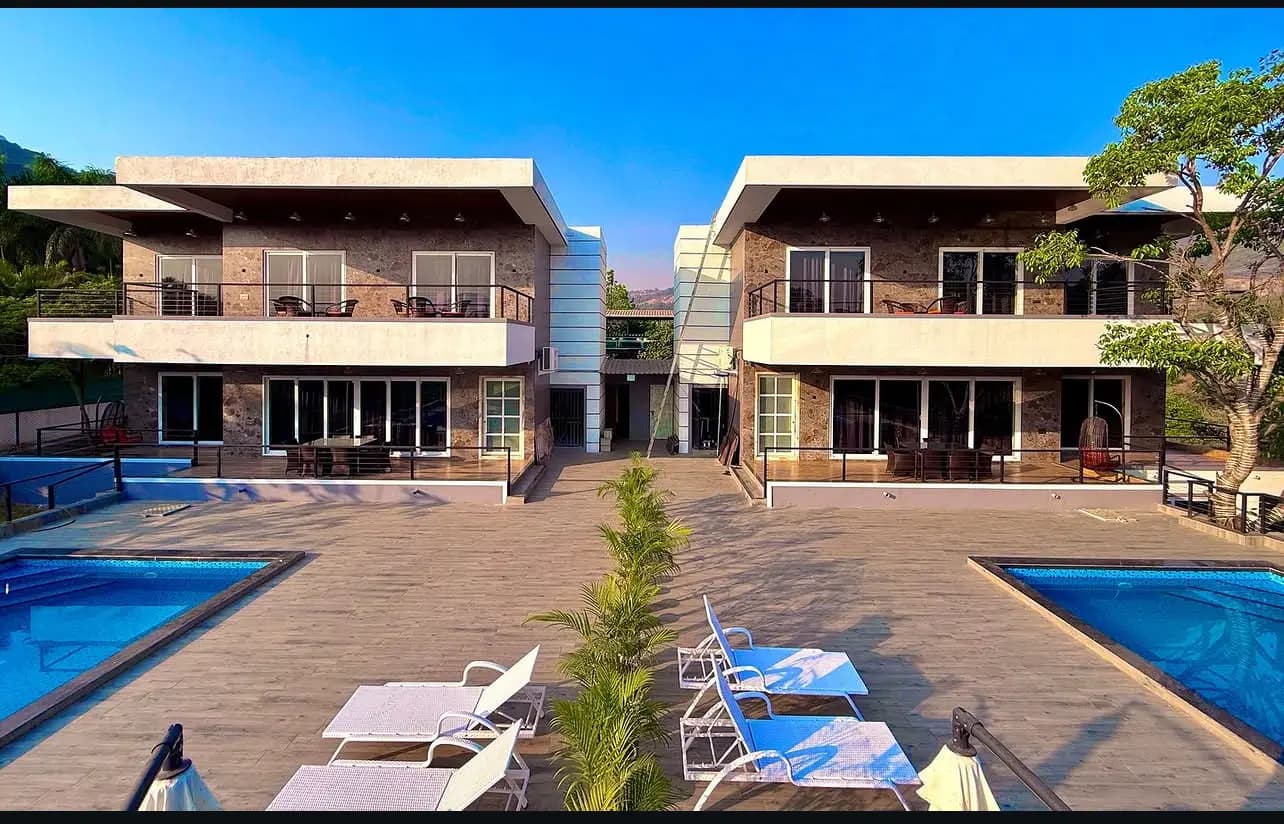
Alibaug out of season is quiet, green and cheap. What the ferry actually does in July, what the beaches are like, and whether the trip is worth making.
The season nobody books
Alibaug's reputation is built on the dry months. From November to May it is Mumbai's weekend coast — ferries running constantly, villas booked out, the Kihim and Nagaon beaches busy every Saturday. Between June and September almost none of that happens. Which is the entire argument for going. The Konkan coast in monsoon is a different landscape: paddy fields flooded and green, laterite hills running with water, and beaches that have perhaps four people on them. If you have only seen Alibaug in December, you have not really seen it. The counter-argument is equally real. The sea is dangerous in monsoon and swimming is genuinely out. The ferry service — which is what makes Alibaug feel close to Mumbai — is disrupted or suspended for much of the season. And several of the things people go for, including the water sports and the beach shacks, simply are not operating. So it is a good trip with a narrower set of reasons than the winter version. Go for green and quiet, not for the beach.
The ferry question, answered honestly
This is the single most important practical fact about a monsoon trip here.
The RoRo and passenger ferries between Mumbai and Mandwa are what turn a four-hour drive around the creek into a one-hour crossing. In the monsoon, sea conditions frequently suspend them — sometimes for days, sometimes at a few hours' notice. Services typically thin out or stop from around June through September, resuming when the sea settles.
Do not build a monsoon Alibaug trip around the ferry. Plan to drive, via Panvel and Pen, which is roughly three and a half to four hours from most of Mumbai. If the ferry happens to be running when you travel, treat it as a bonus.
The practical version: check on the day, not the week before, and have the road route as your actual plan rather than your fallback.
Lonavala at a glance
| Properties listed | 6 |
| Areas covered | 6 |
| With a private pool | 6 of 6 |
| With a children's pool | 3 of 6 |
| Weekday rates | ₹6,160 – ₹23,600 |
| Typical (median) | ₹15,840 |
| Day capacity | 15 – 25 guests |
| Best season | June to September for the monsoon scenery, October to February for comfort; weekends sell out, midweek is transformed |
What the coast is like in July
Alibaug's beaches — Kihim, Nagaon, Akshi, Varsoli — are flat, dark-sanded and backed by casuarina and coconut. In the dry season they are pleasant and busy. In the monsoon they are spectacular and empty, with heavy surf and a wide tidal flat. They are not swimming beaches at this time of year and it is worth being blunt about that. The Konkan coast has strong currents and undertows in monsoon, lifeguard cover is minimal or absent, and every year produces avoidable incidents. Walk on them, photograph them, do not go in. The compensation is inland. The stretch between Alibaug and Revdanda is one of the prettier short drives on this coast in July — paddy, creeks, old Portuguese fortifications at Korlai and Revdanda, and the Kolaba fort sitting offshore at Alibaug itself, which is walkable at low tide and surrounded at high. Most groups who enjoy a monsoon trip here spend the time at the property and take one drive. Groups who arrive with a beach itinerary tend to be disappointed.

What we list here
Alibaug is a small market on our platform — two properties, both villas, in Kihim Beach and Khandale. Capacities of twelve and sixteen, with prices in the ₹5,000 to ₹12,000 band.
That thinness is the practical constraint. Alibaug's accommodation market overall is large and skews towards private villas rented directly, many of them expensive; what we list is a small slice. For a monsoon weekend that matters less than it would in December, because demand is low — but it does mean the choice is short.
If the dates are fixed and both are taken, the sensible widening is inland rather than along the coast: Raigad covers Khopoli, Pen, Panvel and Budruk, with five properties and the widest price spread of any of our markets.
What to prioritise on the listing
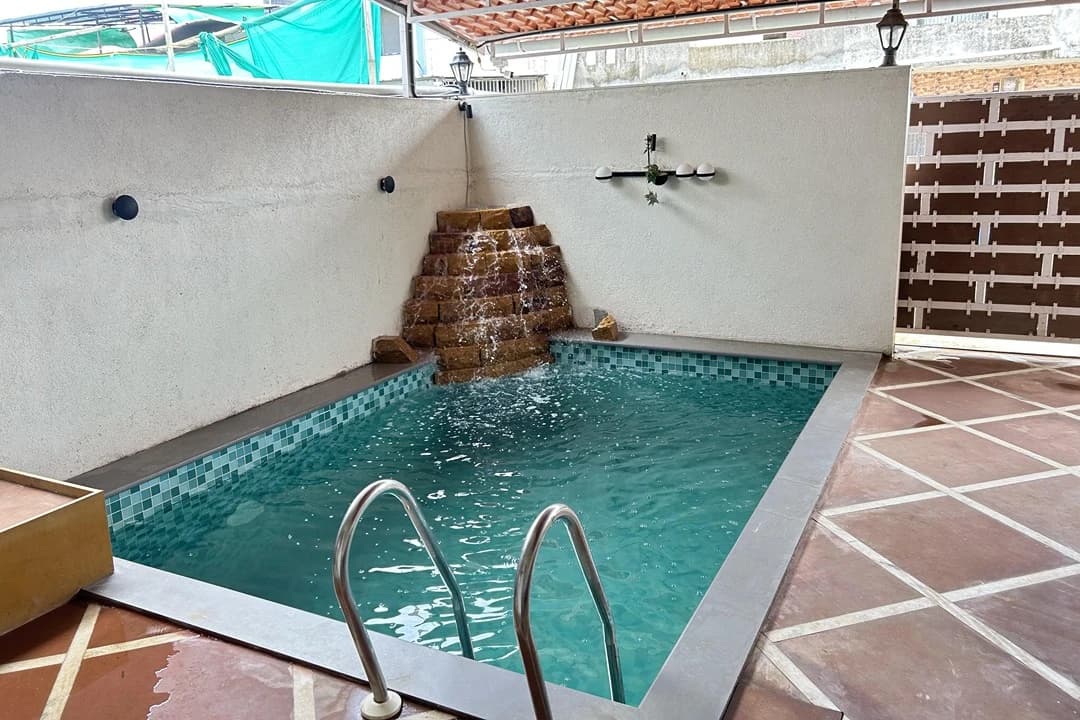
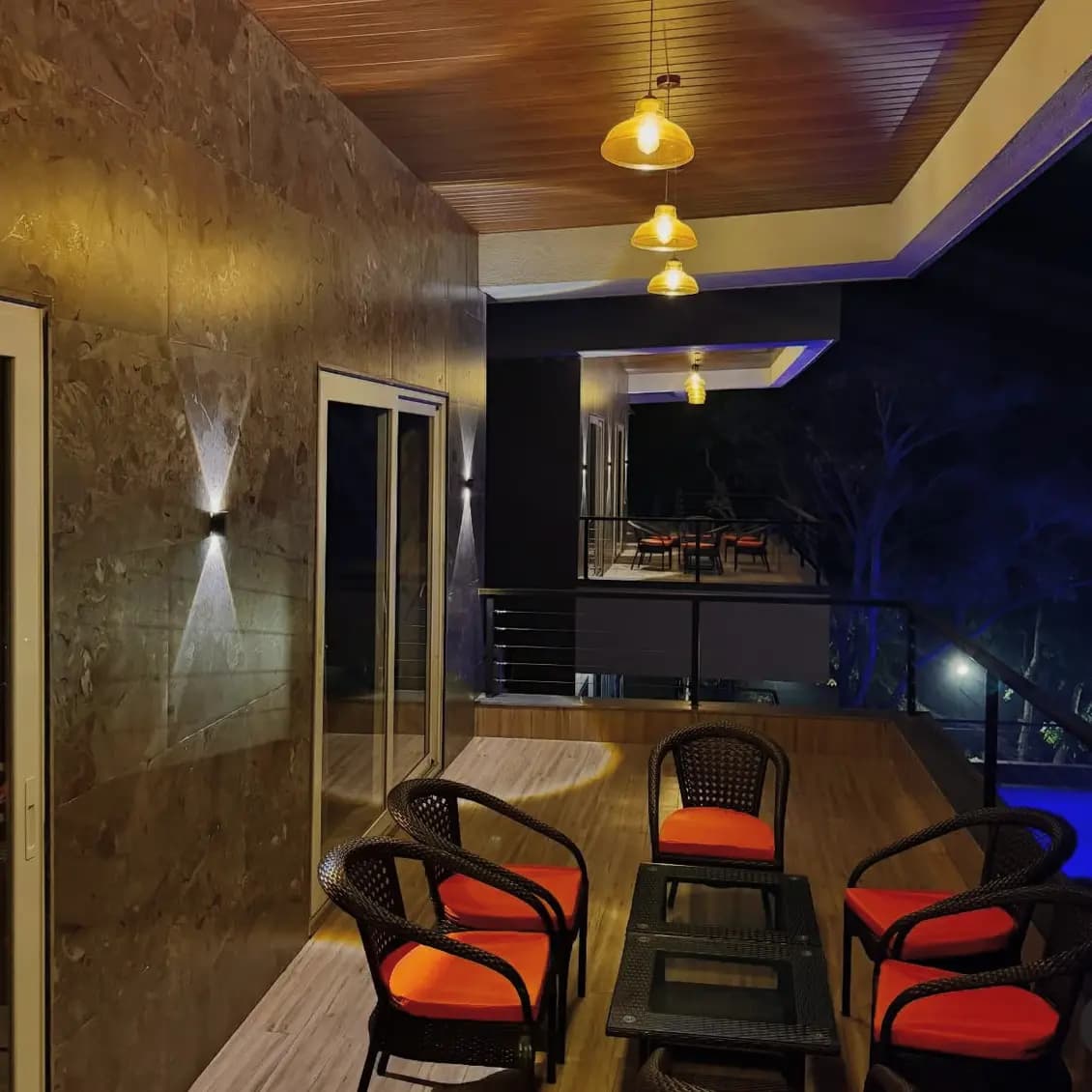
Covered outdoor space, first and above everything. A Konkan villa with a lawn and no shelter is a difficult booking in July, and the pleasure of this coast in monsoon is being outside in the air while it rains rather than shut indoors. Then indoor space sized for the group. Two nights on the coast in heavy rain means real time inside, and a villa with one small sitting room and four bedrooms handles that badly. Then a working kitchen, or a very clear food arrangement. Restaurant options thin out substantially out of season — a good number of the places that serve the winter crowd simply close — and delivery to a villa outside the town is unreliable in heavy rain. This is a belt where you plan meals around the property rather than around finding somewhere. Damp is the other thing to ask about. Coastal properties in the monsoon get humid, and whether the bedrooms have air conditioning that can actually run — including whether the backup supports it — is a fair question at this price point.
Who should go, and when
Go in monsoon if you want green and quiet, you are content to spend most of the weekend at the property, and you are driving rather than depending on the ferry. Groups of eight to sixteen, self-sufficient, with a kitchen and something to do indoors.
Do not go in monsoon if the beach is the point, if anyone in the group expects to swim, or if the plan involves water sports and shacks — none of which operate.
Go in season — roughly November to February — for the version Alibaug is famous for: the ferry running properly, the beaches usable, and the whole coast at its most pleasant. That is also when it is busiest and most expensive, and when booking three to four weeks ahead becomes necessary.
The genuinely underrated window is late September to early November, once the sea settles and the ferries resume but before the season crowd arrives. Green still, quiet still, and everything working.
Comparing what Lonavala offers
| Property | Where | Sleeps / by day | From (weekday) | Pool |
|---|---|---|---|---|
| Casa King Casa Queen | Pawna | 15 / 15 | ₹15,840 | Private |
| Secret Heaven | Gold Valley | 25 / 25 | ₹13,200 | Private |
| Enroute | Khandoba Temple | 15 / 15 | ₹10,560 | Private + kids |
| Nature Oasis | Khandala | 18 / 18 | ₹23,600 | Private + kids |
| Arabella Villa | New Tungarli | 23 / 23 | ₹22,000 | Private |
Work the total out for your actual headcount before comparing these. Above roughly twenty guests the per-person charge reorders the list more often than not.
Browse Alibaug and Raigad. The other coastal and near-coastal options within reach of Mumbai are Palghar to the north — quieter again, and cheaper — and Ratnagiri much further down the Konkan. For the hills instead, Karjat, Lonavala and Matheran are all closer than Alibaug is by road in the monsoon.
A note on the drive around the creek
If the ferry is not running — which in July it frequently is not — the road route is via Panvel and Pen, and it is worth understanding what that involves before you commit. It is roughly three and a half to four hours from most of Mumbai, longer from the western suburbs. The first stretch to Panvel is highway and fine. After that you are on the Pen road, which is single carriageway in places, busy with trucks heading down the Konkan, and slow in heavy rain. That distance changes what kind of trip this is. At one hour by ferry, Alibaug is a plausible overnight. At four hours by road, it is a two-night trip or it is not worth doing — you would spend the same time in a car as you would reaching Panchgani. The practical consequence for a monsoon booking: take Friday to Sunday rather than Saturday to Sunday, and check the ferry status on the morning you travel rather than assuming either way. A group that plans for the road and gets the ferry has a good surprise; a group that plans for the ferry and gets the road has lost half a day.

Frequently asked questions
What does Casa King Casa Queen cost?+
The slot rate is ₹15,840 on a weekday and ₹24,640 at the weekend. Above the included headcount there is a per-person charge of ₹1,000 a head, which at a large group moves the total more than the base rate does.
How many properties are there in Lonavala?+
We currently list 6 in and around Lonavala, 3 of which have a separate children's pool.
When is the best time to book near Lonavala?+
June to September for the monsoon scenery, October to February for comfort; weekends sell out, midweek is transformed. If your dates can move at all, a weekday booking saves between a quarter and half the rate, which is more than switching to a cheaper property usually achieves.
Can I book for the day without staying the night?+
Yes. Most properties sell a half day and a full day as well as an overnight, and the day slot is what a birthday or a family lunch usually needs. It is also why the day-time guest limit is often several times the sleeping capacity.
Is the whole property mine, or is it shared?+
The whole property is reserved for your group. The listings state this explicitly and the property FAQs repeat it — you are not sharing a pool or a lawn with another booking.
Can I bring my own food, or use the kitchen?+
It depends on the property, and these are two separate permissions. Some allow outside food but not cooking; some hand you an active kitchen with utensils; a few cater in-house and do not permit outside food at all. Every listing states which applies.
Can I speak to the owner before booking?+
Yes — chat is built into every listing and goes to the owner or their caretaker rather than to an agent. It is the fastest way to settle the things a listing cannot cover, such as an early check-in or whether a road floods.
What lands on the final bill?+
The slot rate for your day type, a per-person charge for guests above the included number, and a small platform fee. The refundable security deposit sits separately and is collected in cash at check-in.