

Homestay Registration and Licence in India: What Owners Need to Know
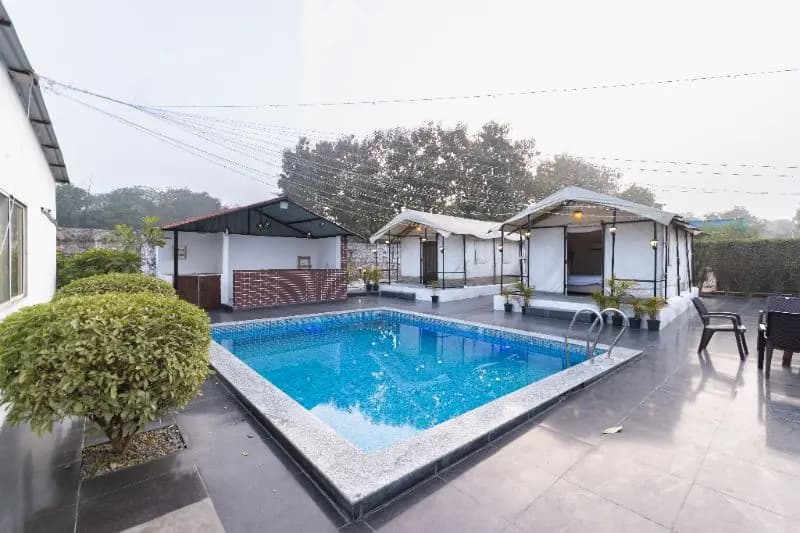
How homestay registration works in India: state schemes, documents, inspections, and other permissions for farmhouse and villa rentals. Checklist inside.
Own a farmhouse, villa or weekend home? Do the paperwork and the listing side by side. List your property on BookMyFarm for free: no listing fee, commission only on confirmed bookings, and you set your own prices and dates.
Homestay registration in India is done by state tourism departments, not by one national body, so the process, the fees and the benefits depend on the state your property is in. This guide explains how these schemes generally work, what documents are usually asked for, the other permissions that may apply to a farmhouse or villa rental (local body, fire, pollution, police reporting, GST), and a checklist you can take to your local tourism office. Rules change and differ by state; always check the current rules with your state tourism department, your local authority and a chartered accountant. We are a booking platform, not a legal adviser.
Does my property need homestay registration?
| Your set-up | Usually relevant |
|---|---|
| You live in the house and rent 1–6 rooms to tourists | State homestay / B&B scheme, where your state has one |
| Whole farmhouse or villa rented to groups, caretaker on site | Often outside homestay schemes; local body permission, land use rules, GST and income tax still matter |
| Rooms or cottages run like a small hotel | Hotel or guest-house rules, local trade licence, fire and pollution approvals |
| Weekend home rented occasionally | Society rules (if any), tax on rental income, local rules |
The common thread in most homestay schemes is that the owner or family lives on the premises and the number of rooms is limited. If that is not you, a homestay certificate may not apply, but other rules still do.
How state homestay schemes generally work
- Apply online or at the state tourism office with property and owner details.
- Submit documents (see the checklist below) and any fee.
- Inspection by a tourism officer, checking rooms, cleanliness, safety and that the owner lives there.
- Certificate or category issued, sometimes with a grade (for example, gold or silver) based on facilities.
- Renewal every few years, with re-inspection.
Benefits vary by state and can include listing on the state tourism website, domestic rather than commercial tariffs for electricity and water, and training. Some states have dedicated schemes for rural, farm or heritage homestays. Check what your state currently offers.
Documents commonly asked for
- Proof of ownership (sale deed, property tax receipt) or a lease that allows it.
- Owner's photo ID and address proof (Aadhaar, PAN, passport).
- Recent electricity and water bills.
- Photographs of the property and each guest room.
- A floor plan or room list.
- No-objection from the local body, society or neighbours, where required.
- A fire safety declaration or certificate, where required.
- Police verification of the owner or staff, in some states.
- Bank details and, if registered, GSTIN.
Ready to try it with your own property?
While your paperwork is in progress, you can prepare your listing as a draft. Start your free listing with your mobile number; you can save a draft and finish later.
Other permissions that may apply to farmhouse and villa rentals
| Permission | What to ask | Who to ask |
|---|---|---|
| Land use | Can this agricultural or residential land be used for paid stays or events? | Revenue department, gram panchayat, municipal body |
| Trade or business licence | Is a licence needed for paid accommodation here? | Municipal corporation or panchayat |
| Fire safety | Is a fire NOC needed for the size and number of guests? | Local fire department |
| Pollution control | Do the pool, sewage or generator need consent? | State pollution control board |
| Guest reporting | Must guest details be reported to the police, and how? (Foreign guests are commonly reported through Form C.) | Local police station; Bureau of Immigration for foreigners |
| Music and events | Are there noise limits or permission needs for loudspeakers and events? | Local police, district administration |
| Liquor | Is an occasional permit needed if guests drink at events? | State excise department |
| GST and income tax | Do I need GST registration? How is this income taxed? | Chartered accountant |
None of this is meant to put you off: thousands of Indian owners host legally. It is a list of questions to settle once, so you are not surprised later.
A practical registration checklist
- Find your state tourism department's homestay or B&B scheme page and read the eligibility.
- Call or visit the district tourism office and ask what applies to your exact set-up.
- Ask the panchayat or municipal office about land use and trade licences.
- Ask the local police station about guest registers and Form C for foreign guests.
- Meet a CA about GST registration, invoicing and income tax.
- Talk to your insurer about cover for paying guests.
- Collect documents into one folder: ownership, ID, bills, photos, certificates.
- Put a renewal date in your calendar.
How this connects to listing on a booking platform
Booking platforms each have their own checks. On BookMyFarm, the team reviews every listing and the property before it goes live, and you can apply for a verified host badge by uploading a government ID, an electricity bill in the same name (or a rent agreement) and a short self-declaration video at the property. The Host Policy makes the host responsible for legal compliance of their own listing and for collecting and verifying guest ID at check-in, and BookMyFarm provides booking details on valid request in any legal matter. In short: registration with the state and verification on a platform are separate, and you should do both. More in our guest verification and safety guide.
Mistakes to avoid
- Assuming a homestay certificate covers events and parties; it usually does not.
- Running on a domestic electricity connection when the rules require commercial, or the other way round.
- Not keeping a guest register when your state or police station asks for one.
- Listing more rooms than your certificate allows.
- Forgetting renewals.
Where to start today
Do the paperwork in parallel with getting the property ready, not after. You can create a free BookMyFarm listing as a draft, finish photos and pricing, and go live once your checks are done. Read the full how to start a homestay business guide and the step-by-step guide to renting out a farmhouse.
Questions to ask at the tourism office
- Does my property qualify, given how many rooms I have and whether I live there?
- What is the current fee and how long does approval take?
- Is there an online portal?
- What will the inspection check?
- What benefits come with registration?
- When and how do I renew?
Write the answers down with the date and the officer's name; rules and fees change, and a note helps if you need to follow up.
Frequently asked questions
How do I register a homestay in India?+
Through your state tourism department's homestay or bed-and-breakfast scheme, where one exists. You usually apply online or at the office, submit ownership and ID documents, pass an inspection, and receive a certificate that you renew every few years.
Is homestay registration mandatory?+
It depends on the state and your set-up. Some states require it for homestays; elsewhere it is optional but brings benefits. Check current rules with your state tourism department.
What documents are needed for homestay registration?+
Commonly ownership proof, the owner's ID and address proof, electricity and water bills, photos of the rooms, a room list, and sometimes a no-objection certificate, fire safety documents or police verification.
Can a farmhouse be registered as a homestay?+
Only if it meets the scheme's conditions, which in most states include the owner living on the property and a limit on rooms. A farmhouse rented whole to groups often falls outside homestay schemes and needs other local permissions instead.
What is the homestay registration fee?+
Fees vary by state and category and change over time. Check the current fee with your state tourism department.
Do homestays get domestic electricity rates?+
Some state schemes offer domestic rather than commercial tariffs to registered homestays. Check what your state currently provides.
Do I need to report guests to the police?+
Many places require hosts to keep a guest register, and foreign guests are commonly reported through Form C. Check with your local police station.
Do I need GST registration for a homestay?+
That depends on your turnover and the current GST rules for accommodation. Ask a chartered accountant.
Does BookMyFarm require homestay registration to list?+
BookMyFarm reviews each listing and property before it goes live, and offers a verified host badge for owners who upload a government ID, an electricity bill or rent agreement, and a self-declaration video. Its Host Policy makes the host responsible for legal compliance, so complete whatever your state requires.
Can I host guests while my registration is pending?+
Ask your state tourism department and local authority; rules differ. You can prepare a BookMyFarm listing as a draft in the meantime.
Who is responsible if a guest causes a legal problem?+
Under BookMyFarm's Host Policy the host handles check-in and guest ID; BookMyFarm provides booking details and contact information on valid request. Get legal advice for specific situations.
List your property on BookMyFarm
BookMyFarm is an Indian booking platform for private farmhouses, villas, resorts and weekend homes, founded in 2024 in Surat, with listings in 70+ cities and 100,000+ app downloads. It is a DPIIT-recognised startup. Guests use it to book a whole farmhouse or villa for a day picnic or a night, and resorts by the room. Here is what the platform itself says about hosting:
- Listing is free. BookMyFarm earns a commission only on confirmed bookings, so you pay nothing until guests book. Your commission terms are shown when you register and in your owner agreement; we do not quote a single rate here because it is agreed with each owner.
- You control price and dates. You set weekday, weekend and festival prices, day and night slots, guest limits and house rules, and you can block dates whenever you want the property for yourself.
- Guests pay online when they book. Under the Host Policy, payouts go to the bank account in your owner dashboard after guest checkout and verification, within 48 hours (a customer dispute can delay this).
- Calendar sync. The owner dashboard has a calendar-sync screen where you can paste an Airbnb iCal link, which helps avoid double bookings if you also list elsewhere.
- Verified host badge. You can submit a government ID, an electricity bill (or rent agreement) and a short self-declaration video; verified listings get a badge, and the dashboard says they are shown higher in search.
- Review before going live. The team checks your details, photos and the property before the listing goes live, and helps with photos, pricing and the listing on phone and WhatsApp.
How to start: 1) sign in with your mobile number on the list your property page; 2) add details, photos, prices, timings and house rules (save a draft any time); 3) the team reviews the listing and property; 4) start taking bookings and manage everything from the owner dashboard. Read the terms of service and the Host Policy shown in the owner app before you go live, and see how BookMyFarm works for the guest side.
Want a quick estimate first? Try the host earnings calculator. There are pages for each kind of property, listing a farmhouse, listing a villa and listing a resort, and city pages for farmhouse owners in Surat, Hyderabad, Delhi NCR, Lonavala, Udaipur, Ahmedabad, Jaipur and Daman. Everything about hosting is summarised on list your property.
More guides for property owners
- How to earn from a farmhouse: rental income guide
- Farmhouse rental business, step by step
- How to start a homestay business in India
- Villa rental business: costs, pricing and profit
- Airbnb alternative for villa and farmhouse owners in India
- How to get more bookings for your farmhouse or villa
- Farmhouse rental pricing guide for owners
- Farmhouse listing photos and description tips
- GST, income tax and insurance for farmhouse rentals
- Guest verification, house rules and safety for hosts
- Weekend home rental income: renting your second home
- Farmhouse se paise kaise kamaye (Hinglish guide)