

How to Start a Homestay Business in India: Plan, Costs and Bookings
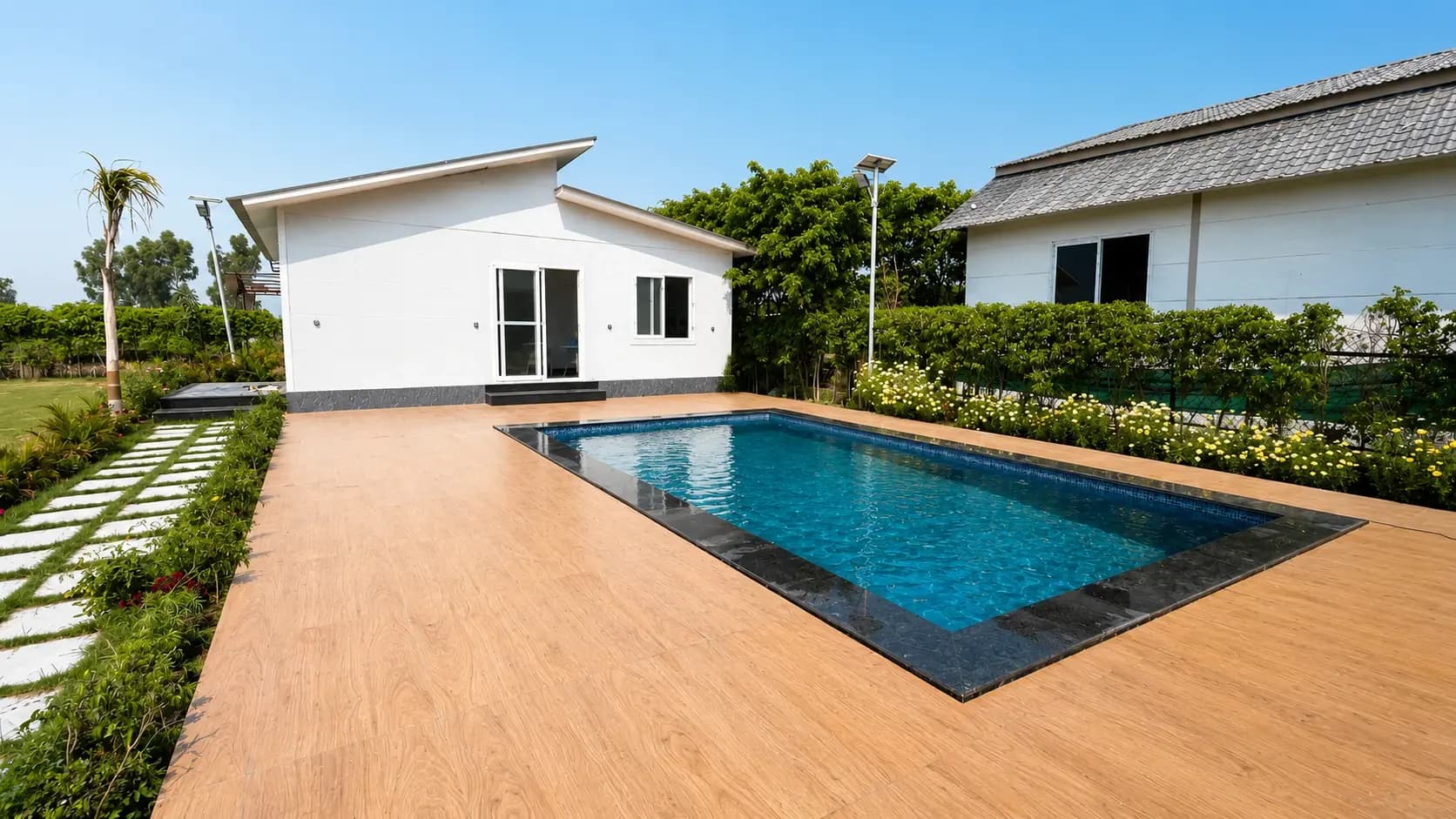
How to start a homestay business in India: format, demand, an illustrative business plan, registration, setup, pricing and how to get your first bookings.
Own a farmhouse, villa or weekend home? Whole cottages, villas and small resorts can list too. List your property on BookMyFarm for free: no listing fee, commission only on confirmed bookings, and you set your own prices and dates.
A homestay business in India means hosting paying guests in a home where the owner or a family member usually lives on the property, often with home-cooked food and local experiences. It sits between a guest house and a private villa rental, and many states actively promote it through homestay or bed-and-breakfast schemes. This guide covers how to start one: choosing the format, location and demand, a simple business plan with illustrative numbers, registration, setup, pricing, getting bookings and what can go wrong. If your property is a farmhouse or villa you rent out whole, rather than rooms in a home where you live, our farmhouse rental income guide is the closer fit.
Homestay vs farm stay vs villa rental
| Format | What guests get | Owner on site? | Typical guests |
|---|---|---|---|
| Homestay | A room or two in a lived-in home, often meals | Usually yes (many state schemes require it) | Couples, solo travellers, small families |
| Farm stay | Rooms or cottages on a working farm, farm activities | Often | Families with kids, city groups |
| Private farmhouse or villa | The whole property, booked by a group | Caretaker, not owner | Groups, parties, families |
| Small resort | Several rooms, shared pool, restaurant | Staff | Couples and families |
The format matters because registration schemes, tax and guest expectations differ. A home where the family lives and hosts 2–6 rooms usually qualifies for state homestay schemes; a whole villa rented to groups often does not.
Step 1: Check the demand where you are
- Tourist destinations (hills, beaches, heritage towns): steady leisure demand, often seasonal.
- Near big cities (within 1–2 hours): weekend getaways and day picnics; strongest for whole-property rentals.
- Near pilgrimage sites, colleges, hospitals or industrial areas: weekday demand from visitors.
Search your area on booking sites, note how many listings there are and what they charge, and look at their calendars on a weekend two or three weeks out. Full calendars mean demand.
Step 2: Write a one-page business plan (illustrative)
Illustrative scenario only: these are example numbers to show the maths, not a forecast or a promise of bookings or income on BookMyFarm or anywhere else.
| Line | Example: 3-room homestay in a hill town |
|---|---|
| Room rate (with breakfast) | ₹2,500 per night |
| Rooms × nights available per month | 3 × 30 = 90 room-nights |
| Occupancy: low / medium / high | 30% / 50% / 70% |
| Room revenue per month | ₹67,500 / ₹1,12,500 / ₹1,57,500 |
| Food and extras | +10–25% if you serve meals |
| Running costs (staff, food, power, laundry, repairs) | ₹30,000–₹50,000 |
| Commission on platform bookings | As per each platform's agreement |
If you rent a whole villa or farmhouse instead of rooms, the maths changes: one booking at ₹8,000–₹15,000 for the whole property, a few times a week. Compare both with the scenarios in our villa rental business guide.
Ready to try it with your own property?
Whole cottages, villas, farmhouses and small resorts can all be listed. Start your free listing with your mobile number; you can save a draft and finish later.
Step 3: Registration and paperwork
Many states have homestay or B&B schemes run by the state tourism department, often with a simple application, an inspection, and a certificate or category. Some give benefits such as domestic rates for electricity and water, or listing on the state tourism website. Typical requirements include ownership proof, the owner living on the premises, a cap on the number of rooms, fire safety basics and guest registers. Details differ by state and change, so check the current scheme with your state tourism department. Our homestay registration and licence guide explains the general process. For tax, see GST, income tax and insurance and speak to a CA.
Step 4: Set up the rooms
- A good mattress, clean white linen, two pillows each, blackout curtains.
- An attached bathroom with hot water, towels and toiletries.
- Wi-Fi, charging points by the bed, a kettle or tea service.
- A lockable cupboard, a mirror, a fan and, in warm regions, AC.
- Common areas: a sit-out, a dining space, a small library or games.
- Safety: first-aid kit, fire extinguisher, emergency numbers, CCTV at entrances only (never in rooms or bathrooms).
Step 5: Decide what makes your homestay worth a trip
Guests choose homestays for the host and the experience: home food, a farm walk, a village tour, a cooking class, a bonfire, birdwatching, a trek with a local guide. Pick two or three you can deliver every time and put them in your photos.
Step 6: Price it
Start with comparable homestays nearby, then adjust for your rooms, view and food. Charge more on weekends and in peak season, offer a small discount for 3+ nights, and keep your rates the same on every channel. For whole-property pricing see the owner pricing guide.
Step 7: Get bookings
- Booking platforms: list on more than one, and sync calendars.
- Google Business Profile: free, and shows up on Maps.
- Instagram and WhatsApp: short videos of the morning view, the food, the activities.
- Repeat guests and referrals: a thank-you message and a returning-guest offer.
BookMyFarm lists farmhouses, villas, resorts and weekend homes; farmhouses and villas are booked whole, and resorts can be booked by the room. If your homestay is a whole cottage, villa or farmhouse, or a small resort with rooms, you can list it free. More in how to get more bookings.
Step 8: Run it well
- Reply fast; most guests book the first place that answers.
- Send directions, check-in time and your phone number the day before.
- Check ID at check-in and keep a guest register as your state requires.
- Ask for a review on the day they leave.
Pros and cons of a homestay business
| Pros | Cons |
|---|---|
| Low start-up cost if you already have spare rooms | Your home is never fully private |
| State schemes can help with registration and promotion | Rules and paperwork differ by state |
| Guests value the personal touch, which is hard for hotels to copy | Income is seasonal in most tourist areas |
| Food and experiences add income | Hosting is a daily job, especially with meals |
Homestay business ideas that work in India
- Farm stay near a city: weekend families, kids' farm activities, home food.
- Heritage home in an old town: architecture, local food, walks.
- Hill cottage: views, treks, bonfires; plan for the off-season.
- Beach house: groups and couples; strong in winter.
- Pool villa near a city: whole-property rentals, birthdays, weekends.
- Workation home: fast Wi-Fi, a desk, weekly rates.
Homestay start-up checklist
- Demand check: five comparable homestays, their prices and calendars.
- One-page plan with low, medium and high occupancy.
- State scheme and local permissions.
- CA meeting on GST and income tax.
- Rooms, bathrooms and safety kit ready.
- Photos, description and prices.
- Listings live, calendars synced.
Frequently asked questions
How do I start a homestay business in India?+
Check local demand, write a simple plan with your costs and expected occupancy, register under your state's homestay scheme if one applies, set up rooms and safety basics, set prices, and list on booking platforms plus Google Maps and Instagram.
Is a homestay business profitable?+
It can be, especially when you already own the rooms. In our illustrative example, a 3-room homestay at ₹2,500 a night earns about ₹67,500 to ₹1.57 lakh a month in room revenue at 30–70% occupancy, against ₹30,000–₹50,000 of running costs. Real results vary by location and season.
How much does it cost to start a homestay?+
If the rooms exist, mostly furnishing, linen, bathrooms and safety equipment: often ₹50,000 to ₹1.5 lakh a room depending on standard. Building new rooms costs far more.
Do I need a licence for a homestay?+
Many states have homestay or B&B registration schemes, and some local bodies require permission. Requirements differ by state and change, so check with your state tourism department and local authority.
Do I need GST registration for a homestay?+
That depends on your turnover and current GST rules for accommodation. Ask a chartered accountant before you start.
What is the difference between a homestay and a villa rental?+
In a homestay the owner usually lives on the property and guests rent rooms; in a villa or farmhouse rental the whole property is booked by one group, with a caretaker rather than the owner on site.
Can I list my homestay on BookMyFarm?+
BookMyFarm lists farmhouses, villas, resorts and weekend homes across India. Whole properties are booked whole and resorts can be booked by the room. Listing is free, with commission only on confirmed bookings.
How do I get bookings for a new homestay?+
Good photos, fast replies, fair prices and the first few reviews matter most. List on more than one platform, set up a Google Business Profile and share short videos on Instagram.
How many rooms can a homestay have?+
State schemes usually cap the number of rooms, often at a handful. Check your state's current rules.
Can I run a homestay in a rented house?+
Only if your rent agreement allows it and the owner agrees in writing; check society and local rules too.
What food should a homestay serve?+
Simple, local, home-cooked food is what guests come for. Say clearly on the listing what is included and what costs extra.
List your property on BookMyFarm
BookMyFarm is an Indian booking platform for private farmhouses, villas, resorts and weekend homes, founded in 2024 in Surat, with listings in 70+ cities and 100,000+ app downloads. It is a DPIIT-recognised startup. Guests use it to book a whole farmhouse or villa for a day picnic or a night, and resorts by the room. Here is what the platform itself says about hosting:
- Listing is free. BookMyFarm earns a commission only on confirmed bookings, so you pay nothing until guests book. Your commission terms are shown when you register and in your owner agreement; we do not quote a single rate here because it is agreed with each owner.
- You control price and dates. You set weekday, weekend and festival prices, day and night slots, guest limits and house rules, and you can block dates whenever you want the property for yourself.
- Guests pay online when they book. Under the Host Policy, payouts go to the bank account in your owner dashboard after guest checkout and verification, within 48 hours (a customer dispute can delay this).
- Calendar sync. The owner dashboard has a calendar-sync screen where you can paste an Airbnb iCal link, which helps avoid double bookings if you also list elsewhere.
- Verified host badge. You can submit a government ID, an electricity bill (or rent agreement) and a short self-declaration video; verified listings get a badge, and the dashboard says they are shown higher in search.
- Review before going live. The team checks your details, photos and the property before the listing goes live, and helps with photos, pricing and the listing on phone and WhatsApp.
How to start: 1) sign in with your mobile number on the list your property page; 2) add details, photos, prices, timings and house rules (save a draft any time); 3) the team reviews the listing and property; 4) start taking bookings and manage everything from the owner dashboard. Read the terms of service and the Host Policy shown in the owner app before you go live, and see how BookMyFarm works for the guest side.
Want a quick estimate first? Try the host earnings calculator. There are pages for each kind of property, listing a farmhouse, listing a villa and listing a resort, and city pages for farmhouse owners in Surat, Hyderabad, Delhi NCR, Lonavala, Udaipur, Ahmedabad, Jaipur and Daman. Everything about hosting is summarised on list your property.
More guides for property owners
- How to earn from a farmhouse: rental income guide
- Farmhouse rental business, step by step
- Homestay registration and licence: what owners need
- Villa rental business: costs, pricing and profit
- Airbnb alternative for villa and farmhouse owners in India
- How to get more bookings for your farmhouse or villa
- Farmhouse rental pricing guide for owners
- Farmhouse listing photos and description tips
- GST, income tax and insurance for farmhouse rentals
- Guest verification, house rules and safety for hosts
- Weekend home rental income: renting your second home
- Farmhouse se paise kaise kamaye (Hinglish guide)