

Amer Fort Jaipur Guide: History, Sheesh Mahal, How to Reach and Tips
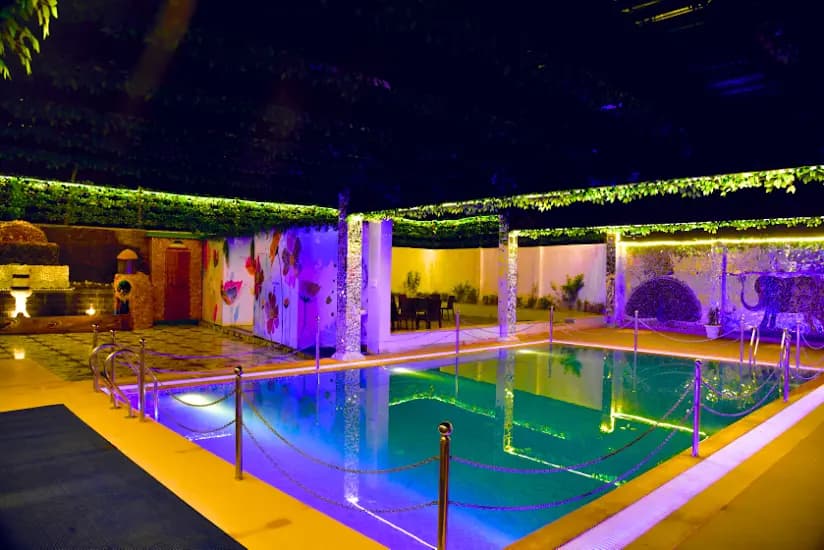
Amer Fort guide: history, the route through its courtyards, Sheesh Mahal, light-and-sound show, how to reach, ticket and timing checks, nearby sights.
Amer Fort (also spelt Amber Fort) is the hill palace of the Kachhwaha rulers, 11 km north of Jaipur, built from the late 16th century by Raja Man Singh I in honey-coloured sandstone and white marble above Maota Lake. It is part of the UNESCO World Heritage Site "Hill Forts of Rajasthan" and the most visited monument in Jaipur. This guide covers its history, how to reach it, the best route through its four courtyards, the Sheesh Mahal, the light-and-sound show, tickets and timings (and why to check them), Jaigarh and the Panna Meena ka Kund stepwell next door, and tips for avoiding the crowds.
Amer Fort at a glance
| Question | Answer |
|---|---|
| Where is it? | Amer town, about 11 km north-east of the Jaipur Old City on the Delhi road |
| Who built it? | Begun by Raja Man Singh I from 1592; expanded by Mirza Raja Jai Singh I and later rulers |
| Time needed | 2–3 hours for the fort; half a day with Jaigarh and the stepwell |
| Best time of day | At opening time, before the tour groups; or late afternoon |
| Best season | October to March |
| Tickets | Separate rates for Indian and foreign visitors; covered by the state composite ticket at times. Check the current fee on the official site. |
| Timings | Day visits from morning to early evening, plus evening night-visit and light-and-sound slots at times. Timings change; check before you go. |
| Nearby | Jaigarh Fort, Panna Meena ka Kund, Anokhi Museum, Jal Mahal, Nahargarh |
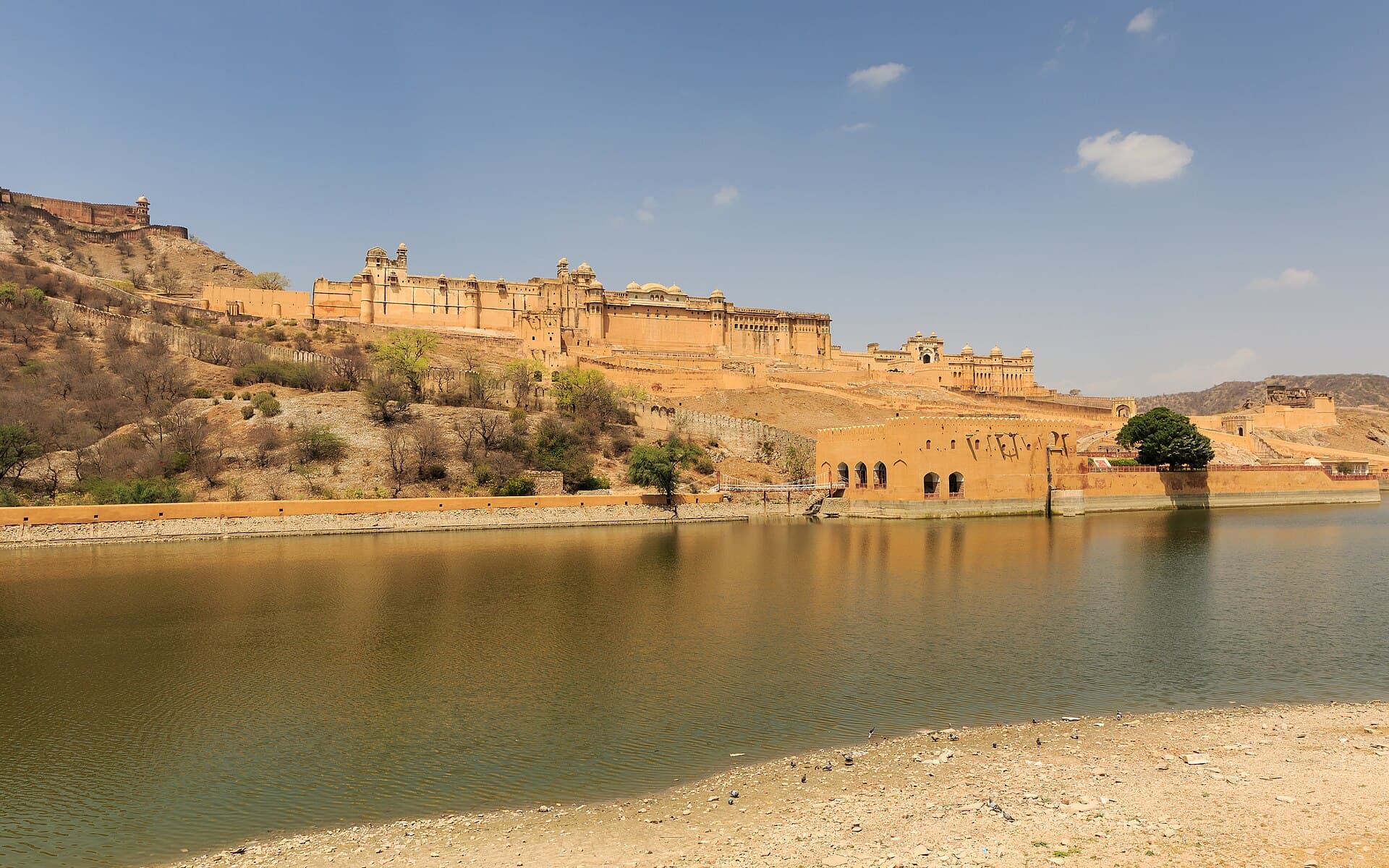
History of Amer Fort
Amer was the capital of the Kachhwaha Rajputs from the 11th century until Sawai Jai Singh II moved the court to the new city of Jaipur in 1727. The palace you see today was begun in 1592 by Raja Man Singh I, a general in Emperor Akbar's army, and much of it was expanded by Mirza Raja Jai Singh I in the 17th century. Rajput and Mughal styles mix throughout: Hindu motifs on the Ganesh Pol, Mughal gardens and arches in the inner courts. The fort was never meant to stand alone: it is linked by walls and passages to Jaigarh Fort on the ridge above, which guarded it and held its treasury and arsenal. In 2013 Amer was inscribed with five other forts as the Hill Forts of Rajasthan World Heritage Site.
How to reach Amer Fort
- By cab or car: 25 to 40 minutes from the Old City via the Amer road past Jal Mahal. Cars park below the fort or at the upper parking; from there, walk up the ramp or take a jeep.
- By bus: city buses run along the Amer road from Ajmeri Gate and the Old City; they are cheap but crowded.
- Walking up: from the road below, a paved ramp winds up to the Suraj Pol in 15 to 20 minutes. It is steady, not steep, and the views open up as you climb.
- By jeep: shared and private jeeps run from the town to the upper gate; agree the fare first.
- Elephant rides: elephant rides up the ramp have been offered in the mornings and have been criticised on welfare grounds. We suggest walking or taking a jeep.
What to see at Amer Fort, in order
1. Suraj Pol and Jaleb Chowk
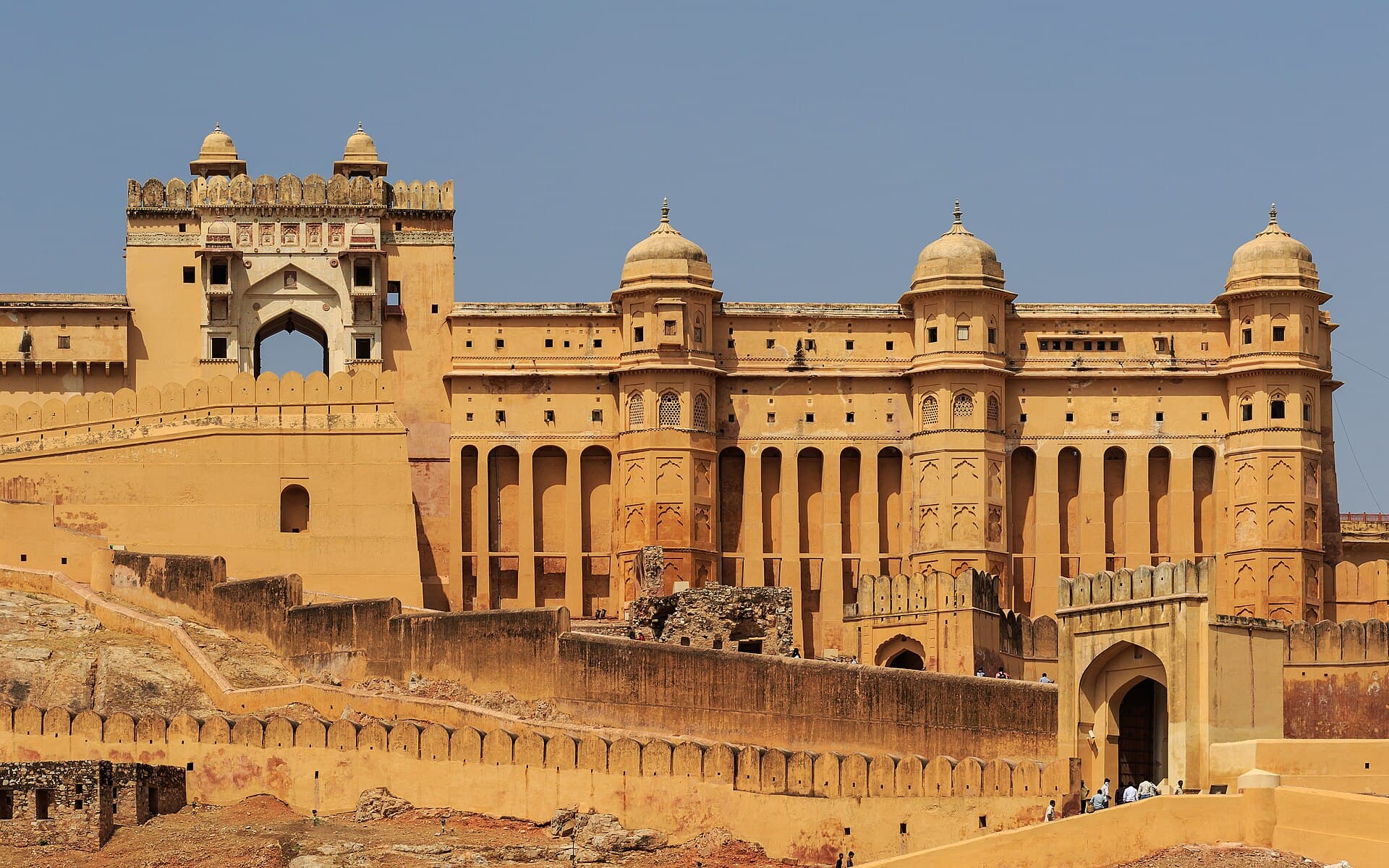
The Sun Gate, facing east, opens into Jaleb Chowk, the first and largest courtyard, where soldiers paraded and returning armies were received. The guards' quarters lined its sides. Steps from here lead up to the palace proper; to the right is the small Shila Devi temple.
2. Shila Devi Temple
The family deity of the Kachhwahas, an image of Kali that Man Singh brought from Bengal. The silver doors are finely worked. Photography is usually not allowed inside.
3. Diwan-i-Aam
The Hall of Public Audience, an open pavilion on a raised platform with a double row of columns, red sandstone below and marble above, where the ruler heard petitions. The capitals are carved with elephants.
4. Ganesh Pol
The painted three-storey gateway into the private palace, covered in frescoes and mosaics, with a small image of Ganesh above the arch. Above it is the Suhag Mandir, from whose latticed windows the royal women watched events below.
5. Jai Mandir and the Sheesh Mahal
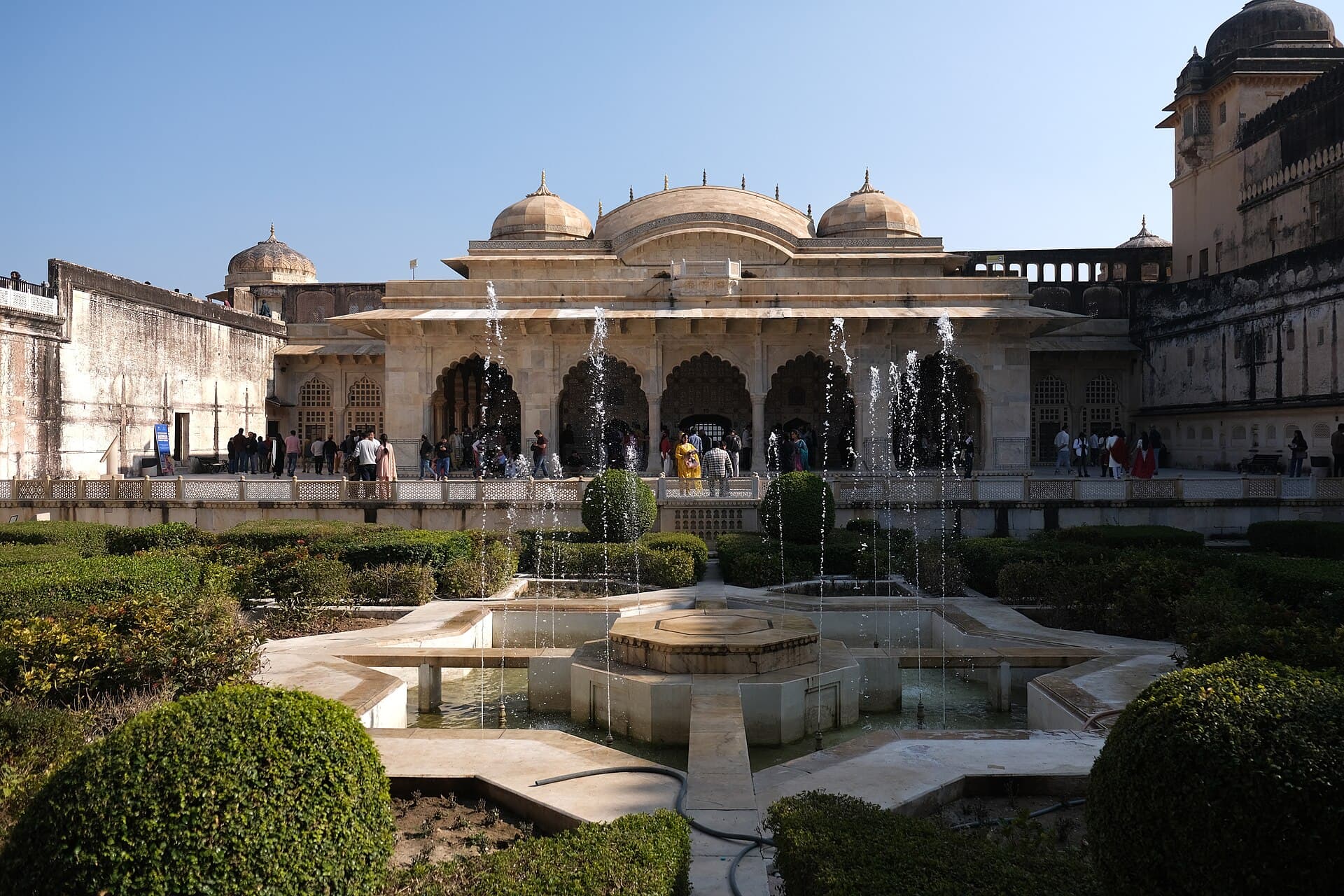
The most famous part of the fort. The walls and ceiling of the Sheesh Mahal are covered in thousands of tiny convex mirror pieces set in plaster; when a single candle is lit, it is said, the whole hall glitters like a starry sky. Today you look in from the doorway, as the hall is roped off. Look also at the marble panels with carved flowers, including the famous "magic flower" that shows several different creatures depending on how you cover it with your hands.
6. Sukh Niwas
Opposite the Sheesh Mahal across a formal Mughal garden, the Hall of Pleasure was cooled by water channelled through the walls and over a marble cascade, an early form of air-conditioning. Its sandalwood and ivory doors are fine work.
7. Man Singh Palace and the zenana
The oldest part of the palace, at the back, with a central baradari pavilion and the apartments of the queens around it, connected so that the king could visit any queen without the others knowing. The rooms are plain now but the layout tells you a lot about court life.
8. The tunnel to Jaigarh
A passage leads from the palace towards Jaigarh Fort on the ridge above, built as an escape route. Part of it has been opened to visitors at times, with a golf-cart ride option; check whether it is open.
Amer Fort light-and-sound show and night visits
An evening light-and-sound show has been staged at the fort for many years, narrating its history in Hindi and English slots, with the fort walls lit in colour. Night visits to parts of the palace, lit up after dark, have also been offered. Show languages, timings and tickets change, and shows may be cancelled in rain, so check the official Rajasthan tourism or Amer development authority site before you go. The fort lit up at night is also lovely from the lakeside below.
Tickets and timings: what to check
Amer Fort has separate rates for Indian visitors, foreign visitors and students, and the state has offered a composite ticket that covers Amer with several other Jaipur monuments over two days. Fees, timings and inclusions are revised from time to time, so we do not quote them here. Check the current details on the official website, and buy at the counter or online. Keep your ticket: it is checked at several points.
Panna Meena ka Kund and Jaigarh
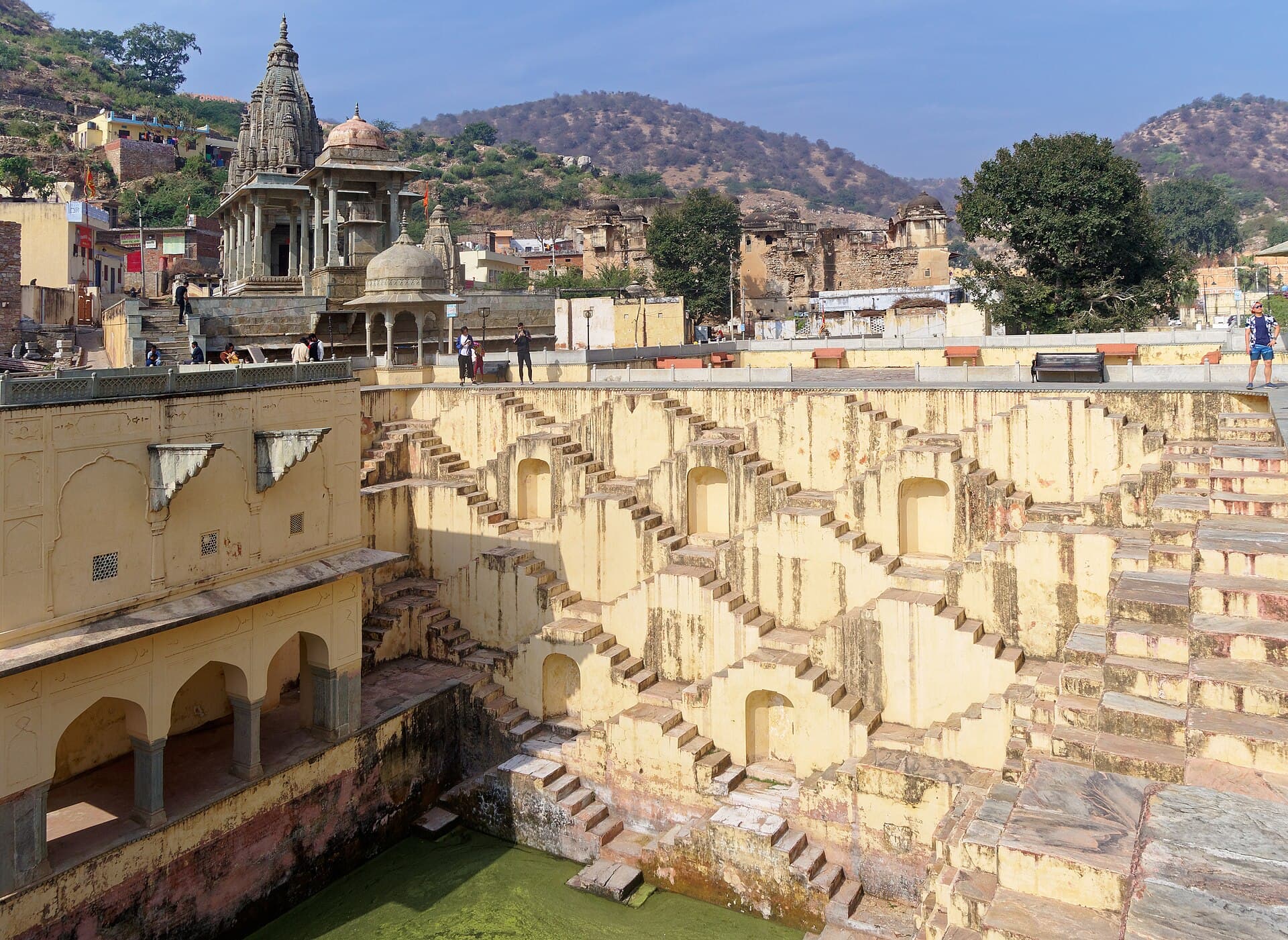
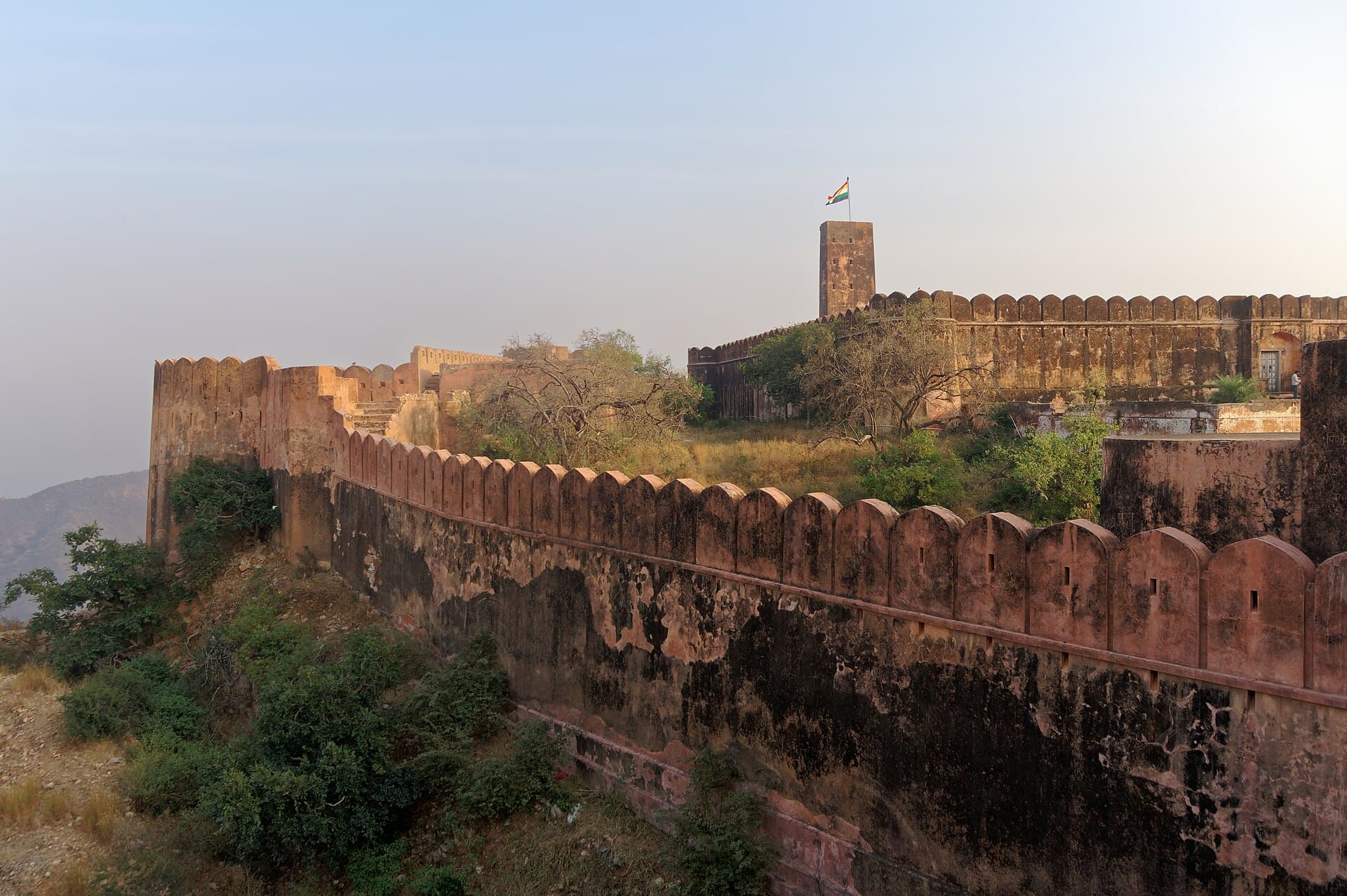
Five minutes from the fort, Panna Meena ka Kund is a 16th-century stepwell whose criss-cross flights of steps make one of the most photographed images of Jaipur; rules on climbing the steps change. Jaigarh Fort, on the ridge above, has the giant Jaivana cannon and wide views; you can drive up or walk from Amer. Together they turn Amer into a half-day.
Amer town
Most visitors never walk the old town below the fort, which is a pity. Jagat Shiromani Temple, with fine 17th-century carving; the Anokhi Museum of Hand Printing in a restored haveli; small stepwells, temples and the old havelis of court officials are all within walking distance. Mornings are best.
Best time to visit Amer Fort
October to March for weather, and at opening time for light and crowds; the inner palaces get very busy from about 10:30 am, when tour groups arrive from Jaipur and Delhi. Late afternoon is the second-best time, with warm light on the walls and Maota Lake. In summer, go at opening time and leave by 11 am.
Photography tips
- The classic view of the whole fort above Maota Lake is from the lakeside road below, early morning or late afternoon.
- Inside, the Ganesh Pol and the Sheesh Mahal are best before the crowds.
- Tripods and drones need permission; check the rules.
- The lit-up fort at night is best from the road near the lake.
Tips for visiting Amer Fort
- Wear comfortable shoes: there are ramps, stairs and uneven stone.
- Carry water; there are cafes, but queues can be long.
- Hire an official guide at the entrance if you like stories; agree the fee and length first.
- Beware of touts offering "tickets" and "shortcuts" outside.
- Keep food away from monkeys on the ramparts.
Amer fits naturally into day 1 of our Jaipur itinerary, followed by Jaigarh and sunset at Nahargarh Fort. For the other sights, see places to visit in Jaipur.
Frequently asked questions
Who built Amer Fort?+
Amer Fort was begun by Raja Man Singh I in 1592 and expanded by Mirza Raja Jai Singh I and later Kachhwaha rulers.
How far is Amer Fort from Jaipur?+
Amer Fort is about 11 km from the Jaipur Old City, roughly 25 to 40 minutes by road depending on traffic.
How much time do I need at Amer Fort?+
Allow two to three hours for the fort, and half a day if you add Jaigarh Fort and Panna Meena ka Kund.
What are the Amer Fort timings and ticket price?+
Amer Fort is open for day visits from morning to early evening, with separate evening slots at times, and has separate fees for Indian and foreign visitors. Timings and fees change, so check the official website before you go.
What is the Sheesh Mahal at Amer Fort?+
The Sheesh Mahal, or Mirror Palace, is a hall in the Jai Mandir whose walls and ceiling are covered with thousands of small mirror pieces that glitter when lit.
Is there a light and sound show at Amer Fort?+
An evening light-and-sound show about the fort's history has been staged in Hindi and English slots. Check the current timings and tickets before you go, as they change.
Is Amer Fort a UNESCO World Heritage Site?+
Yes. Amer Fort is part of the Hill Forts of Rajasthan World Heritage Site, inscribed in 2013.
How do I reach Amer Fort from Jaipur?+
Take a cab, auto or car along the Amer road past Jal Mahal, or a city bus from the Old City. From the parking, walk up the ramp or take a jeep to the gate.
Is Jaigarh Fort connected to Amer Fort?+
Yes. Jaigarh stands on the ridge above Amer and is connected to it by walls and a passage. You can walk or drive up.
What is the best time to visit Amer Fort?+
October to March, at opening time before the tour groups arrive, or in the late afternoon.
Is Amer Fort good for children?+
Yes. Children enjoy the ramparts, the mirror hall and the walk up the ramp. Keep an eye on them on stairs and high walls, and carry water and snacks.
Where to stay in Jaipur
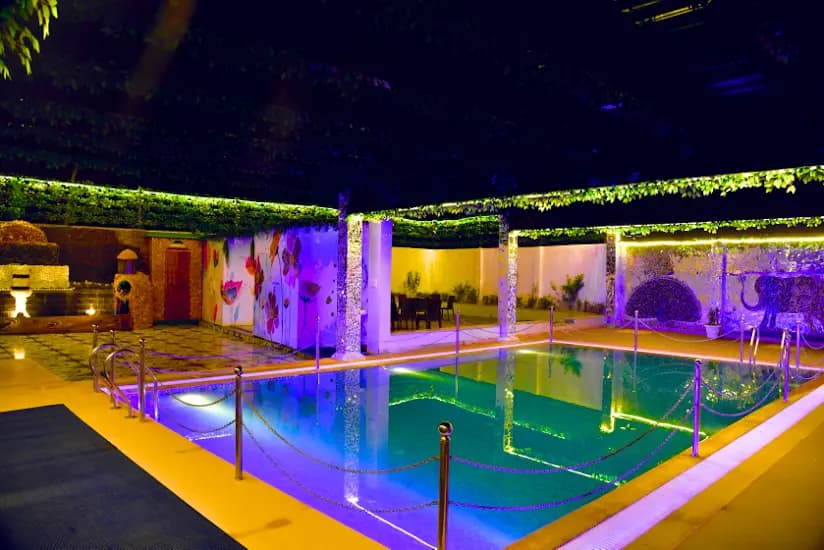
If Amer is your main reason to come, stay close to it. The Amer farmhouse and the Jaishingpura stay to the north let you reach the fort at opening time without crossing the city, and come back to a pool after the climb.
BookMyFarm lists 19 private stays in and around Jaipur: 13 farmhouses, 5 villas and 1 resort, spread around the city from Amer and Jaishingpura in the north to Chaksu on the Tonk road, Kanota and Bassi on the Agra road, and Bhankrota, Mundota and Jobner Road to the west. 14 have a private swimming pool, 3 share a pool, and 6 also have a separate kids' pool. Each is booked whole, for a day picnic or a night, and they sleep anything from 4 to 30 guests.
| Stay | Side of Jaipur | Sleeps | Pool | More in this area |
|---|---|---|---|---|
| Farmhouse in Amer, Jaipur – BMF-F410 | North, near Amer Fort | Up to 12 guests | Shared pool | stays in Amer |
| 2 BHK farmhouse with private pool in Jaishingpura, Jaipur – BMF-F534 | North | Up to 8 guests | Private pool + kids' pool | stays in Jaishingpura |
| Farmhouse with private pool in Sikar Road, Jaipur – BMF-F373 | North-west, on the Sikar road | Up to 15 guests | Private pool + kids' pool | stays in Sikar Road |
| Farmhouse with private pool in Jamdoli, Jaipur – BMF-F405 | East, below the Galta hills | Up to 10 guests | Private pool | stays in Jamdoli |
| Farmhouse with private pool in Kanota, Jaipur – BMF-F490 | East, on the Agra road | Up to 30 guests | Private pool + kids' pool | stays in Kanota |
| If you want | Look at |
|---|---|
| A stay close to Amer Fort | stays in Amer and stays in Jaishingpura |
| A farmhouse with a private pool | pool farmhouses in Jaipur and private pool villas in Jaipur |
| A birthday or a party | farmhouses for birthday parties in Jaipur and farmhouses for large groups |
| A couple's staycation | couple-friendly villas in Jaipur |
| A budget day out | budget farmhouses in Jaipur |
| A family get-together | stays for family get-togethers in Jaipur |
At the time of writing, most Jaipur stays cost roughly ₹5,000 to ₹13,500 for a weekday booking and ₹6,000 to ₹18,500 on weekends. A small garden farmhouse for four starts below ₹3,000, and the largest farmhouse, with six bedrooms, is around ₹20,000 to ₹25,000. Diwali, Christmas, New Year and Holi cost more and fill first. Prices change, so check the live rate on each listing. Browse every farmhouse in Jaipur, every villa in Jaipur and the resort stays in Jaipur, or see all of them on the Jaipur stays page. For a closer look at the areas, read our Jaipur farmhouse and villa guide to areas and prices.
More Jaipur guides
- Places to visit in Jaipur: 40 tourist places
- जयपुर में घूमने की जगह (Jaipur guide in Hindi)
- Jaipur itinerary: 2 and 3 day trip plans
- Best time to visit Jaipur, month by month
- Places to visit near Jaipur: day trips within 200 km
- Nahargarh Fort guide: sunset, Jaigarh and the ridge
- Temples in Jaipur: Galta Ji, Birla Mandir, Akshardham, Moti Dungri
- Places to visit in Jaipur at night
- Jaipur shopping markets and food guide
- Jaipur to Ranthambore: distance and safari trip
- Jaipur to Ajmer and Pushkar: distance and day trip
- Jaipur to Agra via Abhaneri and Bharatpur
- Jaipur to Khatu Shyam: distance, route and Salasar Balaji
- Jaipur to Jodhpur by road, with a Jaipur distance chart
- Farmhouse in Jaipur for a party or day picnic
- Villa in Jaipur with a private pool