

Places to Visit in Jaipur: 40 Tourist Places, Things to Do and Day Trips (2026)
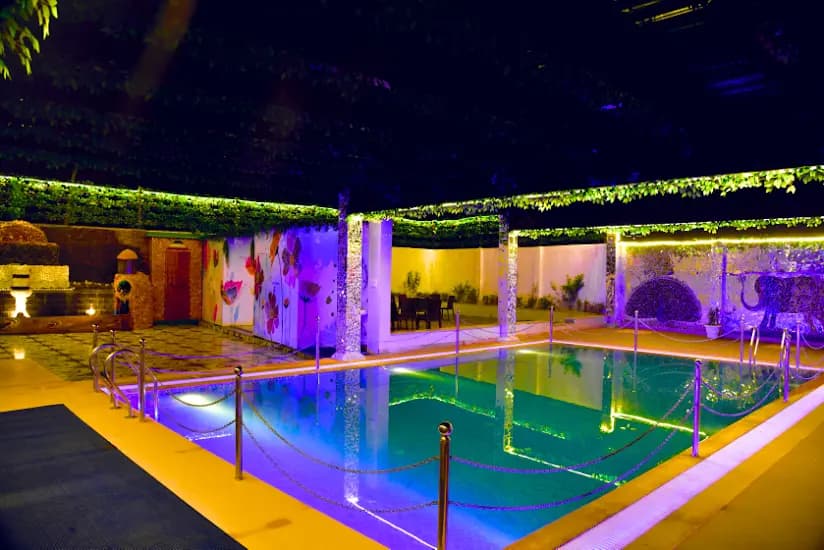
40 places to visit in Jaipur by area: Amer Fort, Hawa Mahal, City Palace, Nahargarh, temples, bazaars and day trips, with time needed and routes.
Jaipur, the capital of Rajasthan, was founded in 1727 by Maharaja Sawai Jai Singh II as one of India's first planned cities, laid out in a grid of broad bazaars inside crenellated walls and later washed in the terracotta pink that gives it the name "Pink City". Ringed by the Aravalli hills, it packs more first-rate sights into a small area than almost any Indian city: three hill forts, a palace still lived in by the royal family, an 18th-century observatory that is a UNESCO World Heritage Site, the honeycomb facade of Hawa Mahal, a palace floating in a lake, temples, stepwells and some of the best shopping in the country.
This guide lists 40 places to visit in Jaipur, grouped by area so you can plan them in a sensible order: the walled Old City, the Amer hills, the newer city to the south, the temples, the gardens and lakes, and the best places near Jaipur for a day out. For each one we give what it is, why it is worth your time, how long to allow and how it fits a route. After the list you will find how many days you need, a route for one, two and three days, the best time to go, how to get around, food to try and where to stay, including private villas and farmhouses with a pool, which suit families and groups far better than a string of hotel rooms.
Jaipur at a glance
| Question | Short answer |
|---|---|
| Why is it called the Pink City? | The Old City was painted terracotta pink, the colour of hospitality, for the visit of the Prince of Wales in 1876, and the colour is still required by law in the walled city |
| How many days do I need? | Two full days for the main sights; three to add the temples, a stepwell and a slower evening; four or more with a day trip |
| Best time to visit | October to March; November to February are the most comfortable months |
| Top 5 sights | Amer Fort, Hawa Mahal, City Palace, Jantar Mantar, Nahargarh Fort at sunset |
| UNESCO sites | Jantar Mantar; Amer Fort (part of the Hill Forts of Rajasthan); the walled city of Jaipur |
| Getting around | App cabs, autos and e-rickshaws; the metro covers only one line; a car with a driver for the forts |
| Composite ticket | The state tourism department has sold a composite ticket covering several monuments; check the current price, validity and list before you buy |
| Distances | Delhi about 280 km, Agra about 240 km, Udaipur about 395 km, Ajmer about 135 km |
Top 10 places to visit in Jaipur
- Amer Fort: the honey-coloured hill palace above Maota Lake, with the mirrored Sheesh Mahal
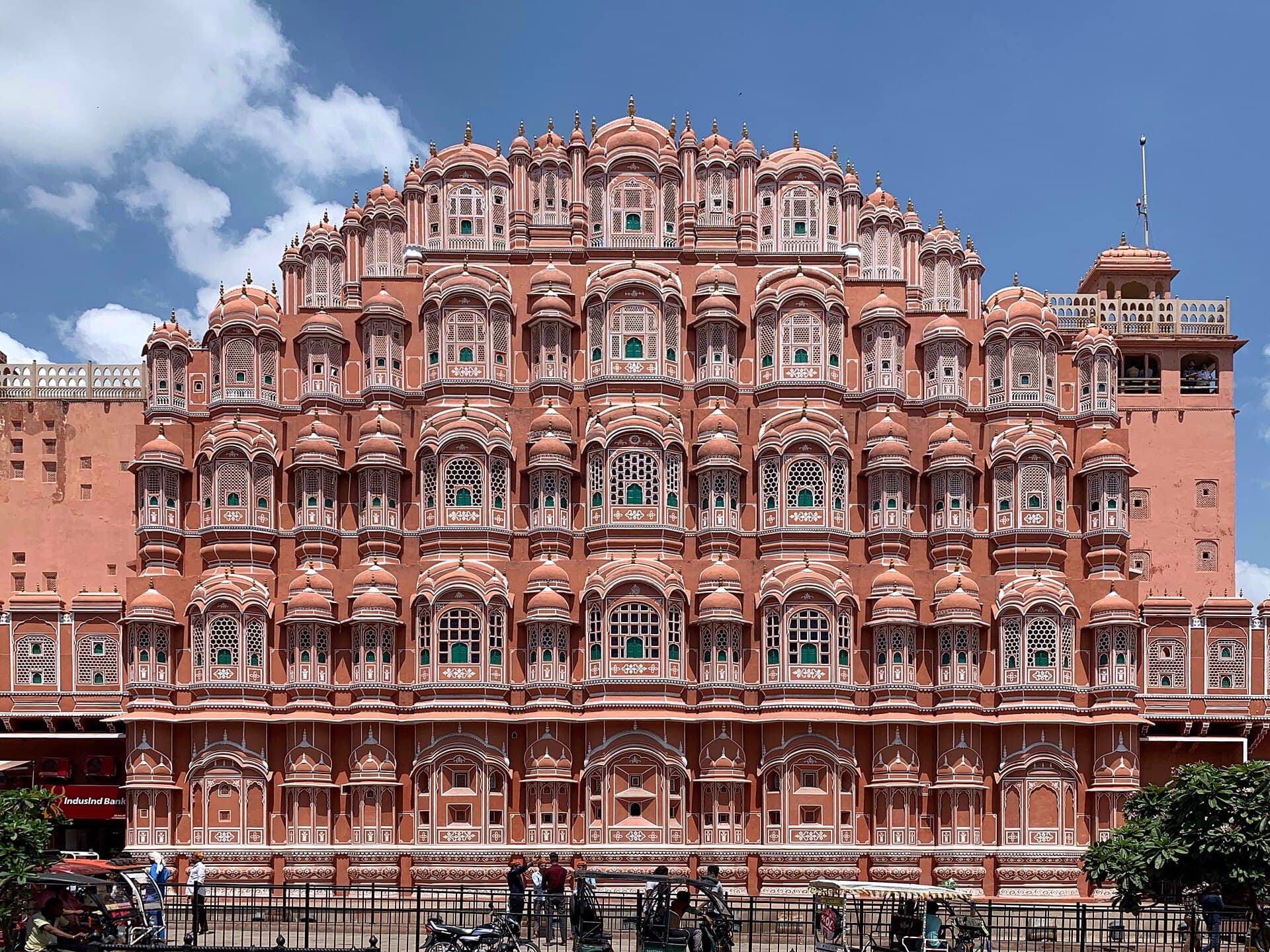
- Hawa Mahal: the five-storey "Palace of Winds" with 953 small windows
- City Palace: the royal residence and museum in the heart of the Old City
- Jantar Mantar: giant stone astronomical instruments, a UNESCO site
- Nahargarh Fort: the ridge-top fort with the best sunset view over the city
- Jaigarh Fort: the military fort with the Jaivana cannon, linked to Amer by walls
- Jal Mahal: the palace that seems to float in Man Sagar Lake
- Albert Hall Museum: the Indo-Saracenic museum in Ram Niwas Garden, lit up at night
- Galta Ji: the "Monkey Temple" of tanks and temples in a rocky gorge
- Patrika Gate and the Old City bazaars: colour, craft and street food
If you only have one day, our Jaipur itinerary shows how to fit the first seven of these into a single long day; if you read Hindi, the same list is in our जयपुर में घूमने की जगह guide.
The Old City (the Pink City)
The walled city is where most first-time visitors spend their first morning. It was planned in nine blocks around the palace, with straight bazaars meeting at large squares called chaupars, and gates named after the places they faced: Ajmeri Gate, Sanganeri Gate, Chandpol, Suraj Pol and others. Walk it early, before the traffic thickens, and keep an eye out for the pink facades, the arcaded shops and the old havelis above them.
1. Hawa Mahal
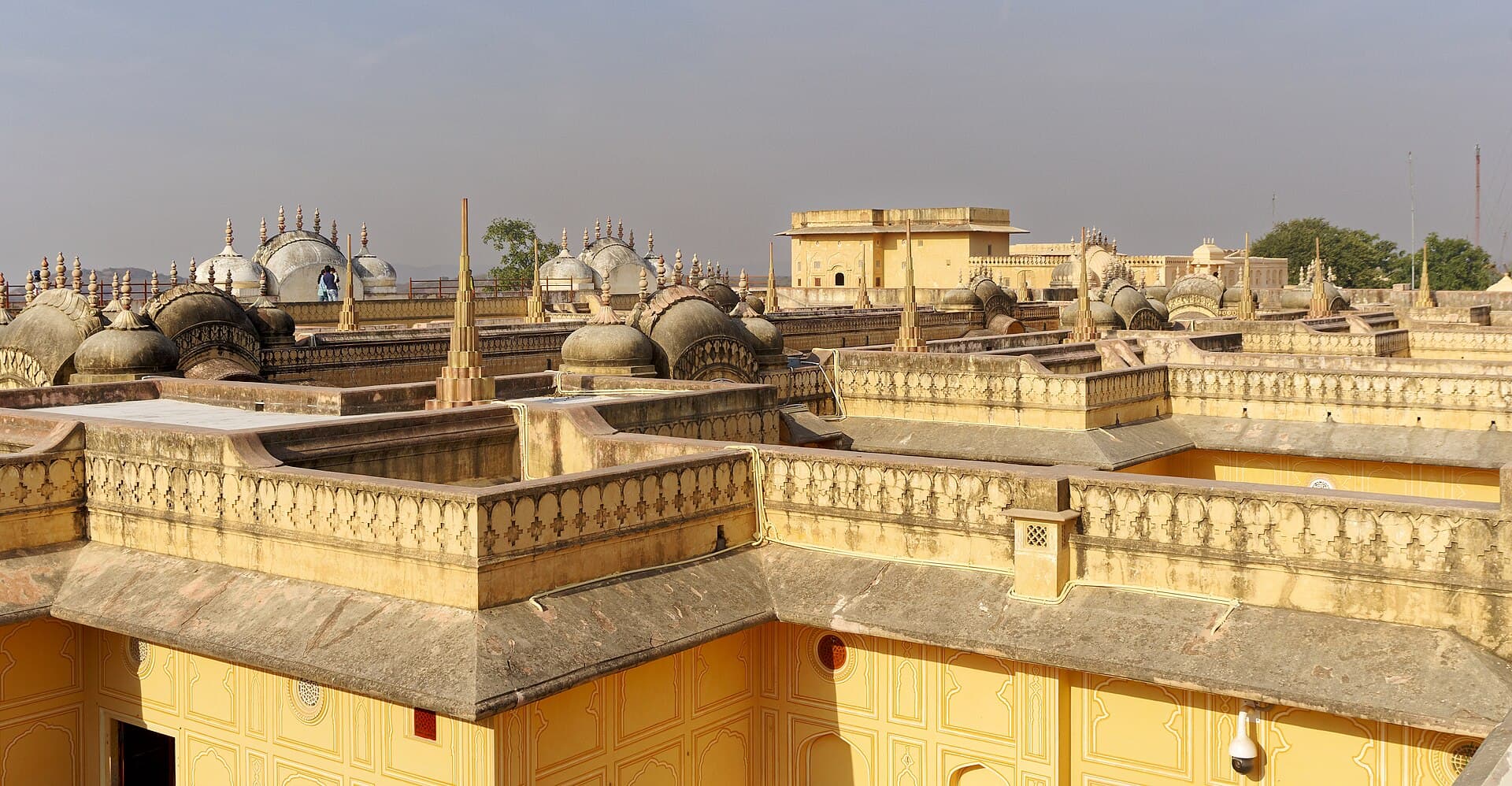
Built in 1799 by Maharaja Sawai Pratap Singh, the Palace of Winds is a five-storey screen of pink sandstone with 953 small windows (jharokhas) carved with latticework, designed so that the women of the court could watch street processions without being seen. It is only one room deep in places, which is why it looks like a facade from the road. The famous view is from the street outside, best in the soft early-morning light when the sun hits the front; the cafes on the rooftops opposite give an eye-level view with a cup of tea. You can also go inside, climbing ramps (not stairs) to the upper levels for views down Siredeori Bazaar and across to Jantar Mantar and the City Palace. Allow 45 minutes to an hour.
2. City Palace
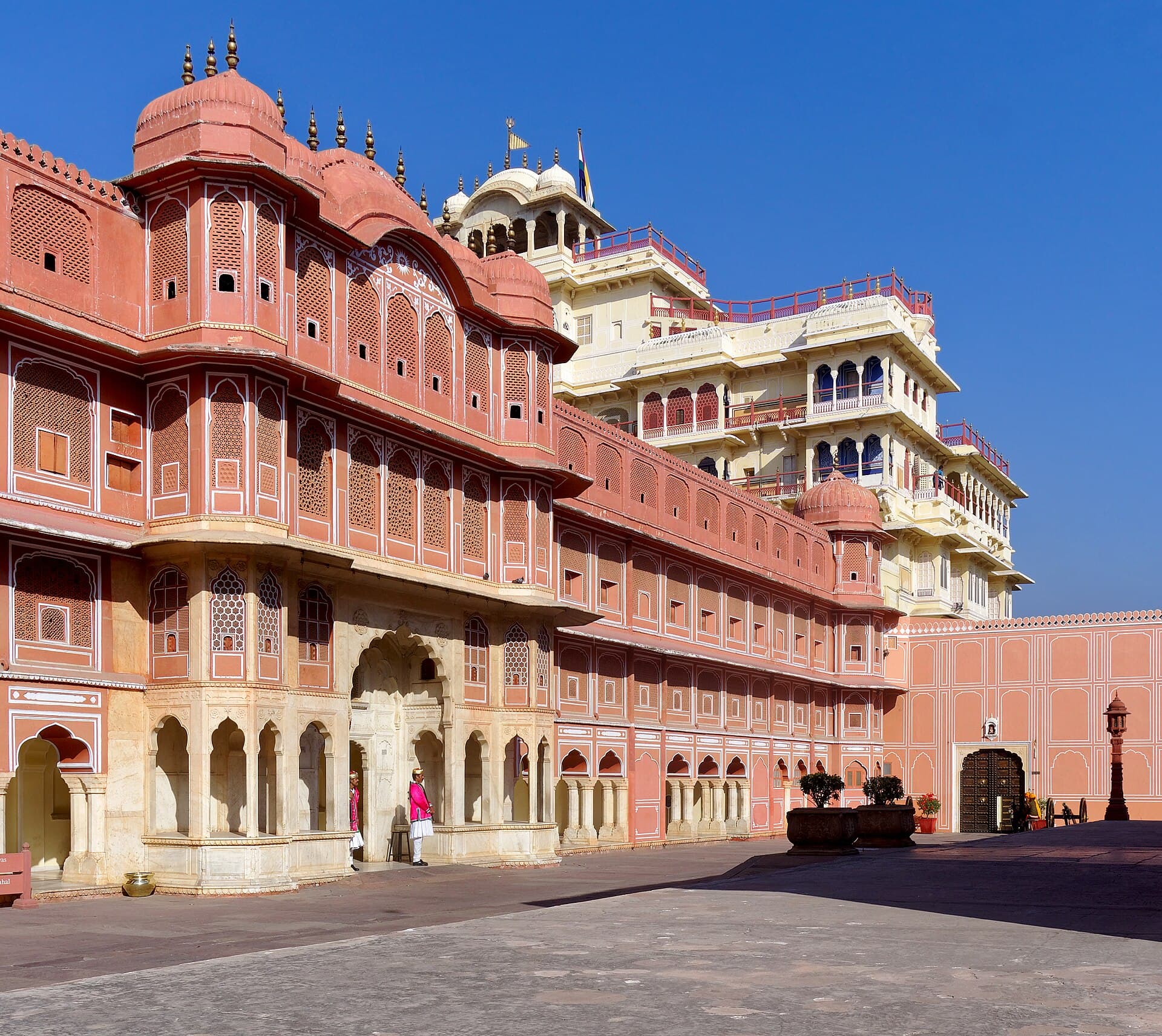
The City Palace is a vast complex of courtyards, gardens and buildings, part of which is still the residence of the former royal family. Highlights include the Mubarak Mahal, a reception palace now holding royal costumes and textiles; the armoury; the Diwan-i-Khas, with two enormous silver urns said to be among the largest single silver objects in the world, made to carry Ganga water to England; and the Pitam Niwas Chowk, a courtyard with four painted gates representing the seasons, the peacock gate being the most photographed. The seven-storey Chandra Mahal is the residence; special tours of parts of it have been offered at a much higher price. Allow two hours.
3. Jantar Mantar
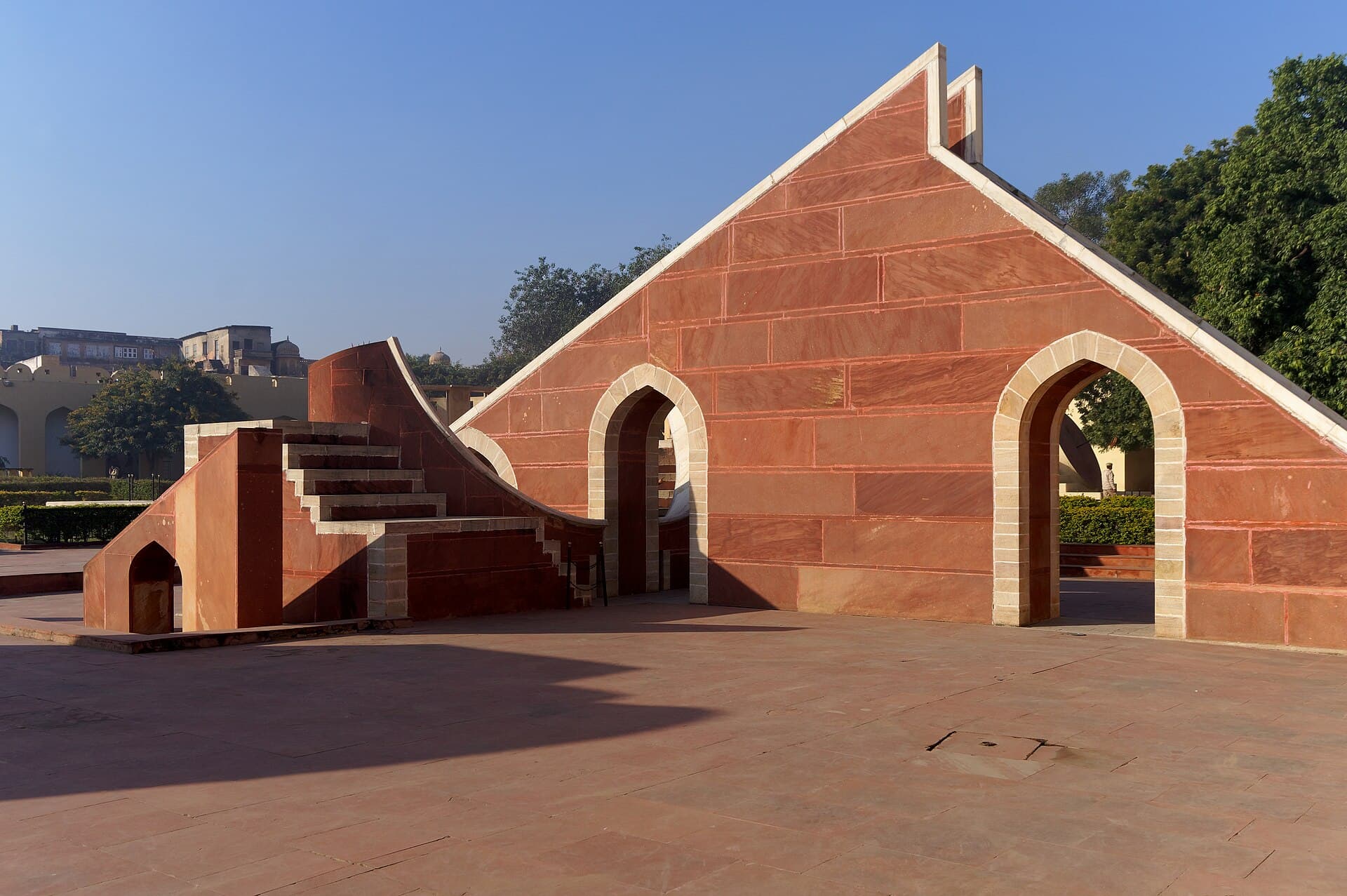
Next to the City Palace, Jantar Mantar is the largest of five observatories Sawai Jai Singh II built in the early 18th century, and a UNESCO World Heritage Site. Its 19 instruments are architecture used as scientific equipment: the Samrat Yantra is a giant sundial whose shadow moves visibly and tells local time to within a few seconds; the Rashivalaya yantras are twelve instruments for the twelve zodiac signs; the Jai Prakash yantras are hemispherical bowls mapping the sky. Go with a guide or the audio guide, otherwise it is just interesting shapes. Visit in the morning or late afternoon, as there is little shade. Allow an hour.
4. Tripolia Gate and Isarlat (Swargasuli)
Tripolia, the triple-arched gate on the bazaar of the same name, was the royal entrance to the palace. Close by, the Isarlat minaret, built by Maharaja Ishwari Singh in the 1740s to mark a victory, can be climbed by a narrow spiral ramp for one of the best views over the Old City's rooftops. It is often overlooked, which is part of the charm.
5. Govind Dev Ji Temple
Within the City Palace grounds, this Krishna temple is one of the most important in Jaipur. The image is believed to have been brought from Vrindavan. Darshan happens at fixed times several times a day, and the evening aarti draws large crowds of devotees; it is a good place to see the living, devotional side of the city. Dress modestly and leave shoes outside.
6. The bazaars of the Old City
Each bazaar has its speciality. Johari Bazaar is for jewellery, gems and silver; Bapu Bazaar and Nehru Bazaar for textiles, mojari shoes and block prints; Tripolia Bazaar for lac bangles, brassware and household goods; Chandpol Bazaar for marble and stone carving; Kishanpol Bazaar for textiles and tie-dye. The shops on the arcaded pavements are wholesale and retail, so bargaining is normal outside fixed-price stores. See our Jaipur shopping and food guide for what to buy and where.
7. Badi Chaupar and Choti Chaupar
The two great squares of the Old City are good places to stand and watch Jaipur happen: cycle rickshaws, flower sellers, camel carts on occasion, and the pink arcades in every direction. Hawa Mahal is a short walk from Badi Chaupar.
8. Ishwar Lat and the old havelis
Many of the merchant havelis in the walled city have fine painted facades and courtyards; a few have become small hotels or shops you can step into. A heritage walk with a local guide is the best way to find them, and several operators run morning walks that also cover temples and street food.
The Amer hills: forts, a stepwell and the old capital
Amer (also spelt Amber), about 11 km north-east of the Old City, was the capital of the Kachhwaha rulers before Jaipur was built. The road climbs past Jal Mahal into a valley ringed by walls and forts. Plan at least half a day here, and come early: the light is better and the crowds thinner.
9. Amer Fort
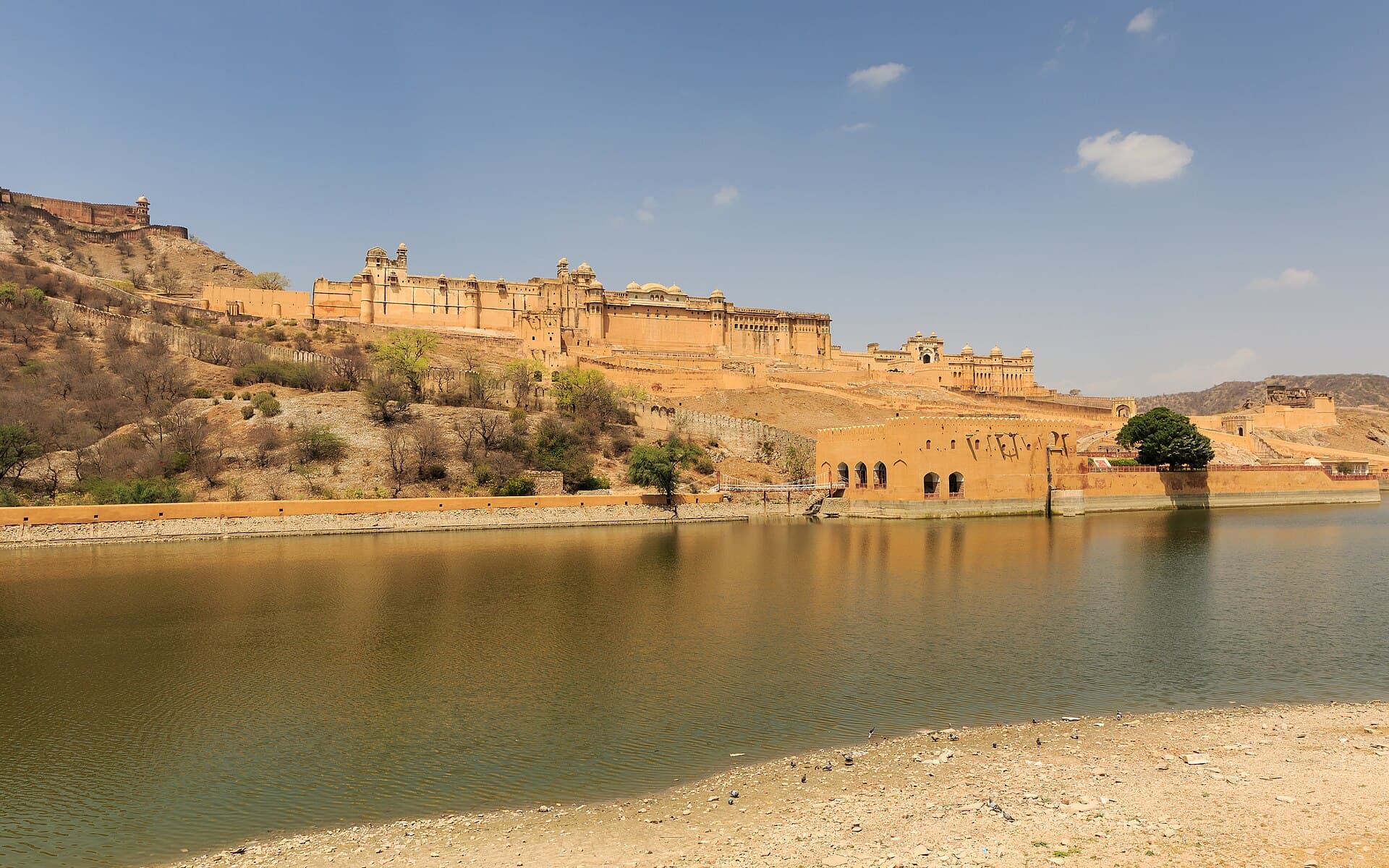
Amer Fort is the single most visited sight in Jaipur, and deservedly so. Built from the late 16th century by Raja Man Singh I and expanded by later rulers, it rises in terraces above Maota Lake in red sandstone and white marble. You enter through the Suraj Pol into Jaleb Chowk, the great courtyard where armies once gathered, then climb to the Diwan-i-Aam, the Ganesh Pol, the garden courts, and the Sheesh Mahal, the mirror palace where thousands of tiny mirror pieces set in the walls and ceiling glitter when a single light is lit. The Sukh Niwas used channels of flowing water to cool the air. In the evening a light-and-sound show has been staged here. For the full guide, with what to see in order and how to reach the fort, see our Amer Fort guide. Allow two to three hours.
10. Jaigarh Fort
Above Amer on the Cheel ka Teela ridge, Jaigarh was the military fort that protected Amer, connected to it by walls and passages. It holds the Jaivana, one of the largest cannons on wheels in the world, cast in the 18th century, as well as a cannon foundry, water tanks, an armoury and a small museum. Its ramparts give wide views over Amer and the Aravallis. You can drive up, or walk from Amer by a steep path. Allow one and a half to two hours.
11. Panna Meena ka Kund
A short walk from Amer Fort, this 16th-century stepwell has symmetrical flights of steps that zig-zag down on three sides to the water, one of the most photographed spots in Jaipur. Rules about climbing the steps change; at times visitors have been asked to stay at the top. Allow 20 to 30 minutes.
12. Anokhi Museum of Hand Printing
In a restored haveli in Amer village, this small museum explains the block printing for which Jaipur is famous, often with a printer demonstrating at work. It is a calm hour after the crowds at the fort. Check its opening days, as it closes for a period in summer.
13. Amer town and Jagat Shiromani Temple
The old town below the fort has temples, stepwells and quiet lanes few visitors explore. Jagat Shiromani Temple, built in the early 17th century, has fine carving and is linked in legend to Meera Bai.
14. Nahargarh Fort
Nahargarh sits on the ridge directly above the Old City, built in 1734 as a retreat and part of the city's defences. The Madhavendra Bhawan inside has a set of identical suites for the king's queens, linked by corridors, with faded frescoes, now partly a sculpture gallery. Most people come for the views: from the ramparts and the cafe terraces you look straight down on Jaipur, and at sunset the city lights come on below you. Our Nahargarh Fort guide covers the road up, the walking path, the sunset points and the Jaigarh link road. Allow two hours, ending at sunset.
15. Jal Mahal
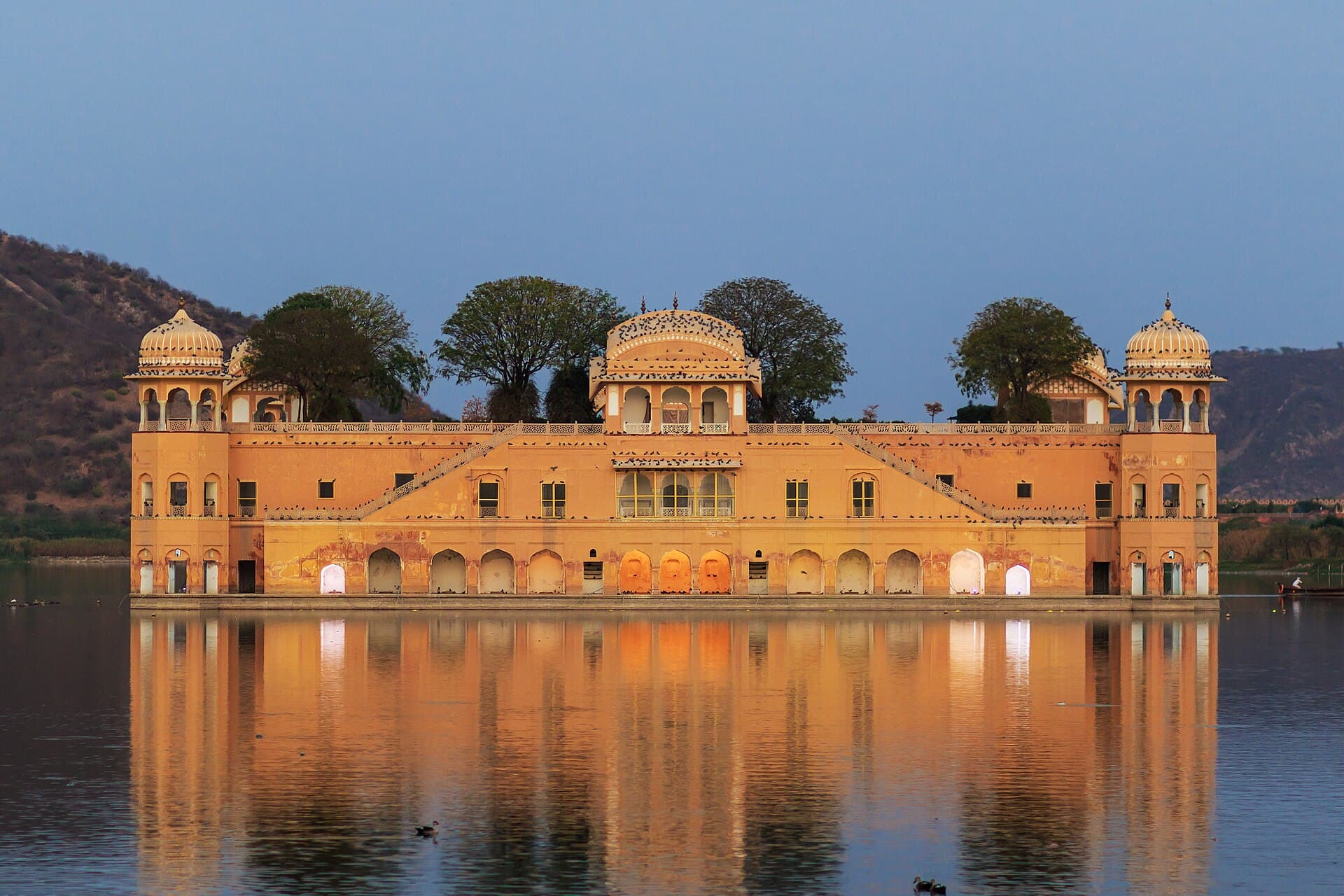
The Water Palace stands in the middle of Man Sagar Lake on the Amer road. It was built as a pleasure palace and duck-shooting lodge in the 18th century, and when the lake is full its lower floors are under water. Visitors are not allowed inside; the view is from the promenade along the road, best at sunrise or in the late afternoon, with the Nahargarh hills behind. Allow 20 minutes as a stop on the way to Amer.
The new city: museums, gates and gardens
South of the walls, Jaipur spread out in the 19th and 20th centuries with wide roads, parks and colonial-era buildings. These sights are close to each other and easy by cab.
16. Albert Hall Museum
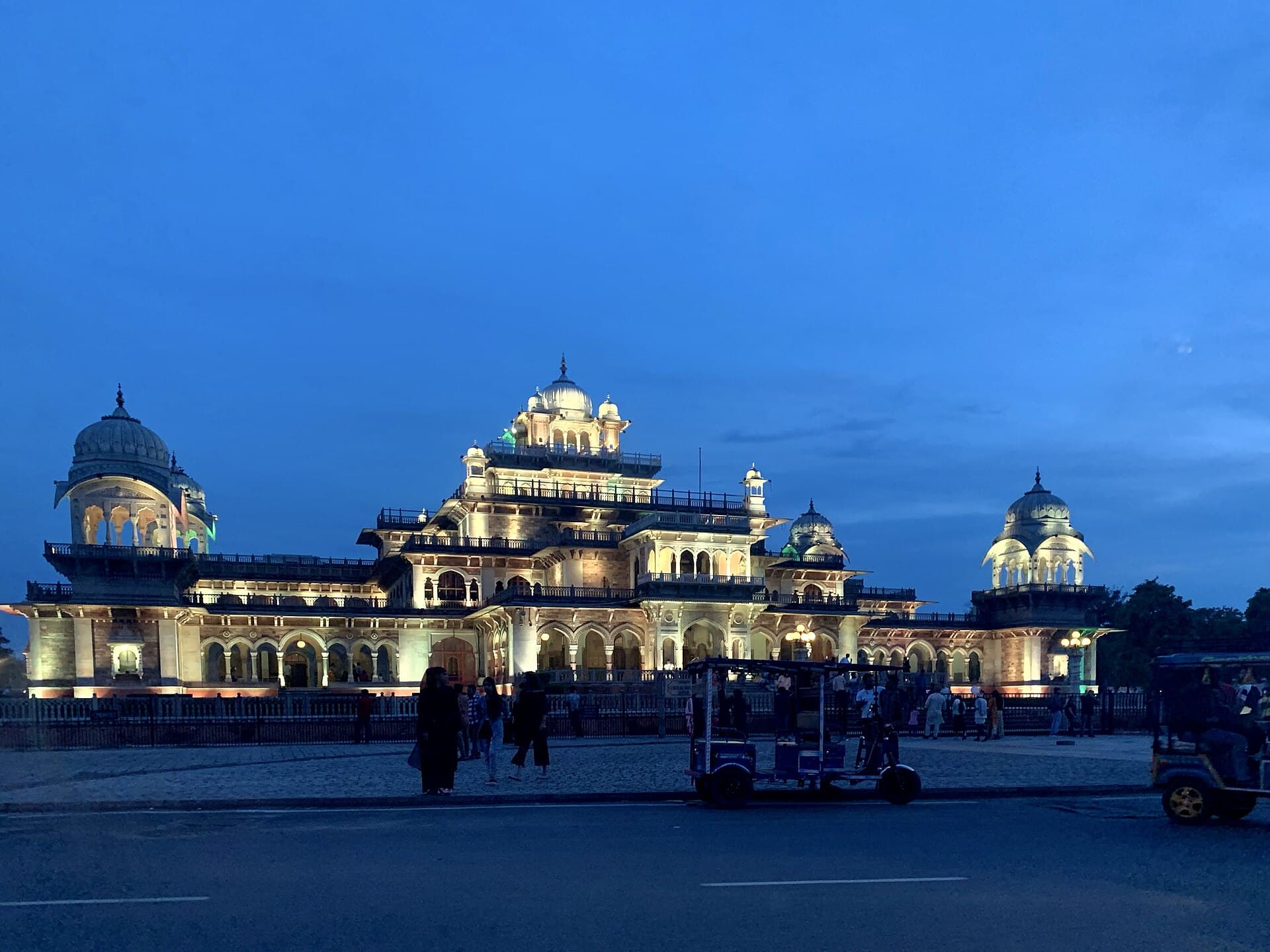
Jaipur's oldest museum, designed by Samuel Swinton Jacob in the Indo-Saracenic style and opened in 1887, sits in Ram Niwas Garden. Its collection ranges from miniature paintings, carpets and arms to pottery, coins and an Egyptian mummy. The building is floodlit after dark, making it one of the best places to visit in Jaipur at night. Allow one and a half hours.
17. Ram Niwas Garden
The large garden around Albert Hall, laid out in the 1860s, has lawns, an old zoo building, the Ravindra Manch theatre and plenty of shade for a break between sights.
18. Birla Mandir (Lakshmi Narayan Temple)
A gleaming white marble temple built by the Birla family in the 1980s below Moti Dungri hill. Its walls carry carvings of figures from many faiths, and its stained glass shows scenes from Hindu scripture. It looks best in the evening when it is lit. See our guide to temples in Jaipur.
19. Moti Dungri Ganesh Temple
Right next to Birla Mandir, this Ganesh temple is one of the busiest in the city, especially on Wednesdays. The small fortified palace on the hill above, Moti Dungri, belongs to the royal family and is not open to visitors.
20. Patrika Gate and Jawahar Circle
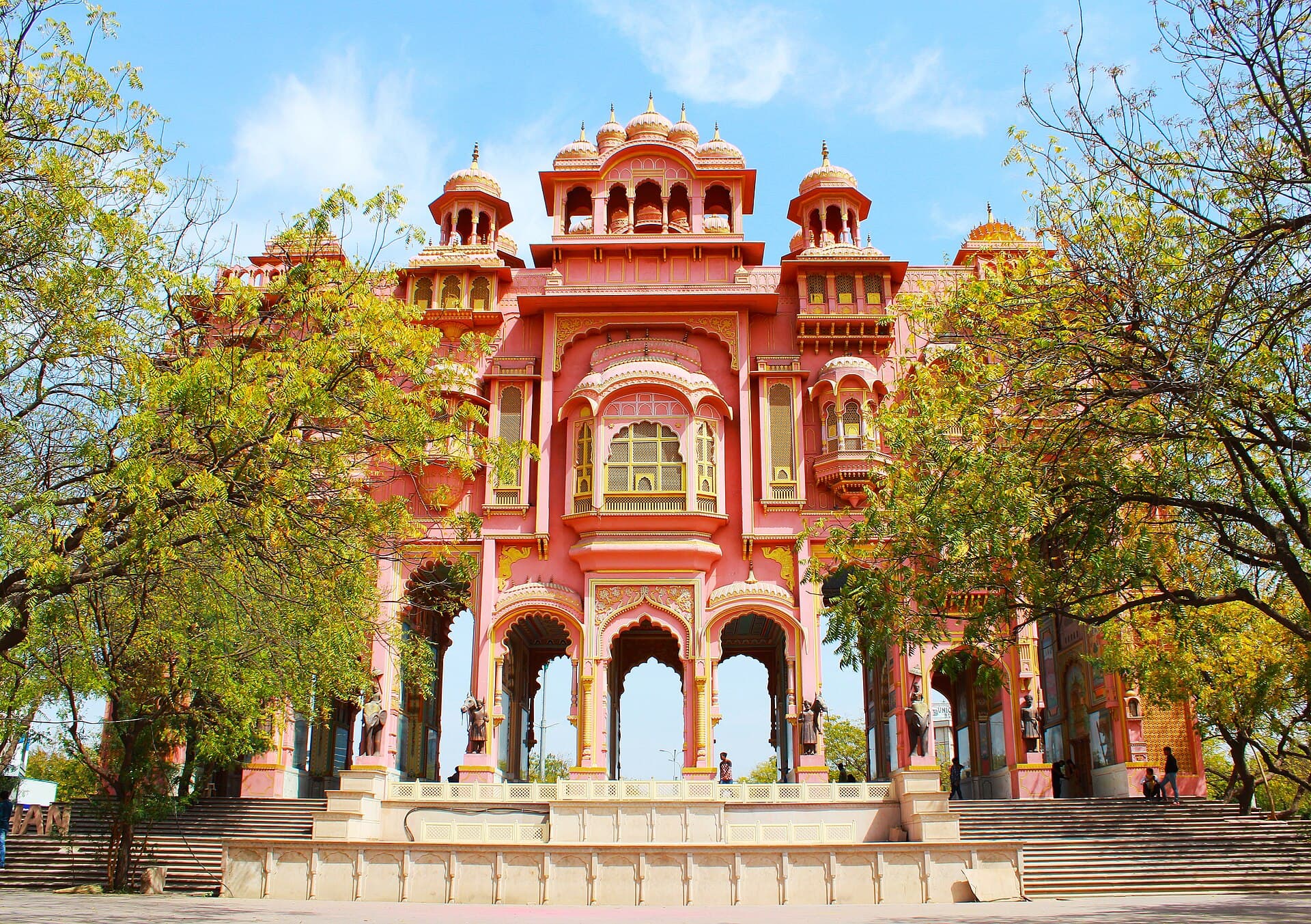
Patrika Gate is a modern ornamental gateway at Jawahar Circle near the airport, every arch and wall painted in bright colours with scenes and motifs from Rajasthan's regions. It became famous on social media and is best early in the morning before the crowds. Jawahar Circle itself is a large park with walking tracks, a musical fountain and a rose garden. Allow 45 minutes.
21. Jawahar Kala Kendra
The arts centre designed by Charles Correa, based on the nine-square plan of the Old City and the navagraha (nine planets), hosts exhibitions, theatre, music and craft fairs. Its cafe is a pleasant stop, and there is usually something on in the winter season.
22. Sisodia Rani ka Bagh and Vidyadhar ka Bagh
Two terraced Mughal-style gardens on the Agra road, east of the city. Sisodia Rani ka Bagh was built for a queen in the 18th century, with fountains, pavilions and murals of Krishna; Vidyadhar ka Bagh honours the city's architect, Vidyadhar Bhattacharya. Both are quiet and green.
23. Central Park
The city's largest park, with a long walking and jogging track, a tall flagpole flying the national flag and the polo ground next door. Good for an early walk if you are staying in the south of the city.
24. Rambagh Palace (from outside, or for tea)
The former royal residence, now a luxury hotel, has lawns and a famous verandah. Non-guests have at times been able to book a meal or high tea; check the current policy before you go.
25. Museum of Legacies and the Rajasthan Police Memorial area
Smaller museums of craft and textiles have opened in restored buildings in the city; they change, so ask locally what is open. If you love crafts, the government emporium Rajasthali is also worth a look for fixed-price items.
Temples, ghats and hills
26. Galta Ji (the Monkey Temple)
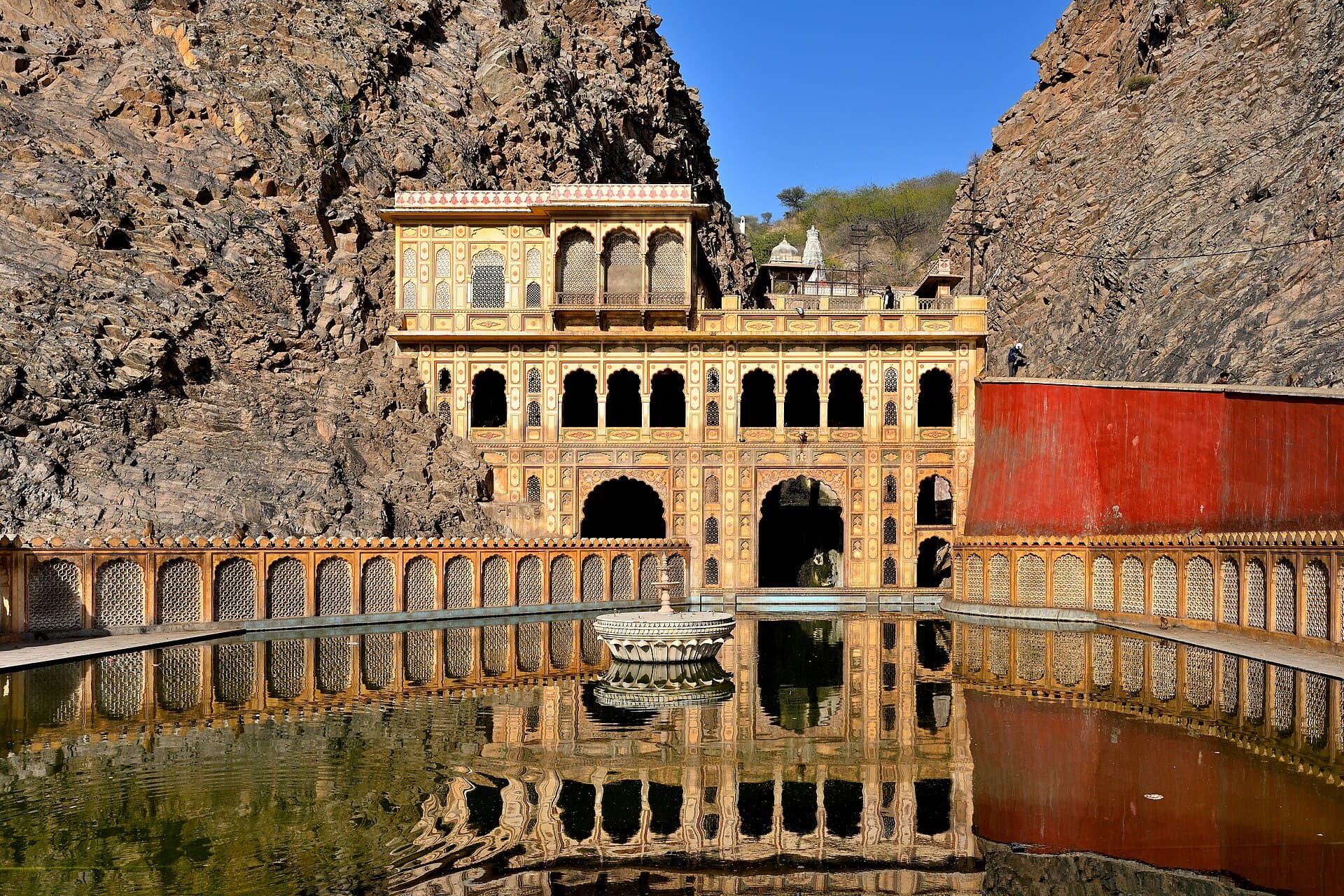
In a narrow gorge in the hills east of the city, Galta Ji is a set of temples and pavilions built around natural spring-fed tanks, the water flowing down from one kund to the next. Pilgrims bathe in the tanks, especially on Makar Sankranti. A large troop of macaques lives here, hence the nickname; keep food out of sight. The Surya Mandir on the ridge above, reached by a path from the city side, gives a sweeping sunset view. Allow one and a half hours.
27. Akshardham Temple, Vaishali Nagar
A carved pink-stone temple of the Swaminarayan sect in western Jaipur, with landscaped gardens, fountains and evening lighting. It is calm and family-friendly; rules on phones and bags are usually strict.
28. Garh Ganesh Temple
A Ganesh temple on the hill above the Old City, reached by a stepped path. The idol is in the form of a child, and the climb rewards you with views over Jal Mahal and the city. Photography inside is not allowed.
29. Khole ke Hanuman Ji
A Hanuman temple in a valley on the Delhi bypass road, set among hills, with steps leading up to further shrines. It is popular with families on Tuesdays and Saturdays.
30. Royal Gaitor (Gatore ki Chhatriyan)
The cremation ground of the Jaipur rulers, below Nahargarh, with carved marble and sandstone cenotaphs (chhatris). The chhatri of Sawai Jai Singh II is the finest. It is quiet, beautiful and almost empty most days.
31. Maharani ki Chhatri
On the Amer road, the cenotaphs of the royal women, smaller and less visited than Gaitor, with elegant domes and a peaceful garden.
Experiences in Jaipur
32. Chokhi Dhani
A recreated Rajasthani village on the Tonk road, south of the city, with folk dance, puppet shows, camel rides, games and a big traditional thali served sitting on the floor. It is touristy but enormous fun for families and groups, best in the evening. Check the current entry package, which usually includes dinner.
33. A hot air balloon ride
In the cooler months, operators have flown balloons over the Amer valley and the countryside at sunrise. Flights depend on the weather and the operator's licence for the season, so book with an established company and expect early starts.
34. A block-printing workshop in Sanganer or Bagru
Sanganer, on the southern edge of the city near the airport, and Bagru, about 30 km west, are the two great centres of hand block printing. Several workshops let you print your own fabric with carved wooden blocks and natural dyes. Sanganer is also known for handmade paper.
35. A cooking class or a food walk
Learn to make dal baati churma, ker sangri or gatte ki sabzi in a family kitchen, or take an evening food walk through the Old City for kachori, ghewar and lassi. Our Jaipur food guide lists what to try.
36. A film at Raj Mandir
Raj Mandir cinema, opened in 1976 with a meringue-like Art Moderne interior, is a Jaipur institution. Watching a Hindi film here with a cheering audience is an experience in itself.
37. Elephant village and wildlife at Jhalana
Jhalana Leopard Reserve, inside the city limits, runs jeep safaris in a patch of dry forest where leopards are seen with surprising regularity. Bookings are on the official Rajasthan forest portal. It is one of the very few places in India where you can see leopards on a morning drive from a city hotel.
Places to visit near Jaipur
Jaipur is a good base for day trips. For the full list, with distances and routes, see our guide to places to visit near Jaipur.
38. Abhaneri and Chand Baori (about 95 km)
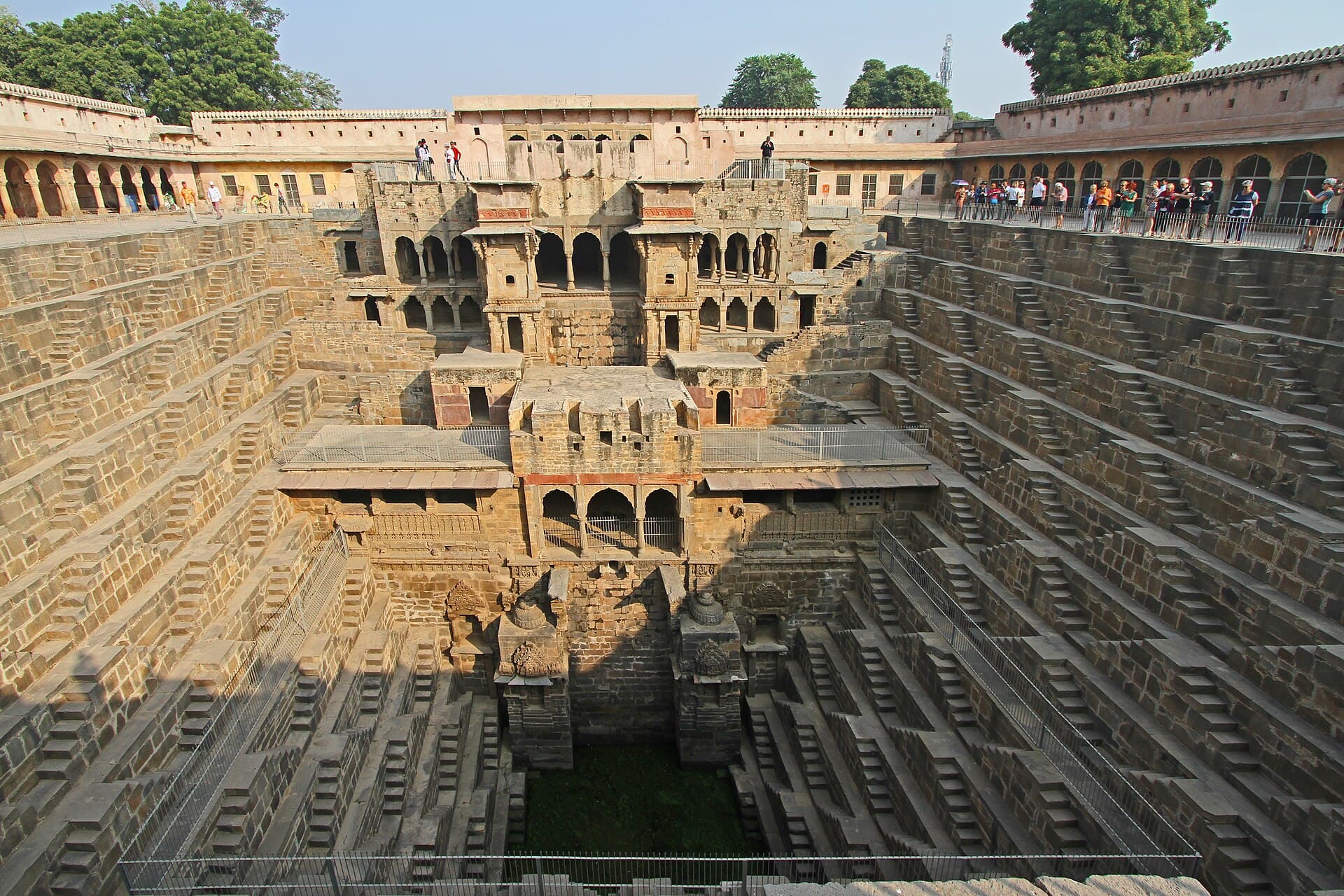
One of the deepest and most dramatic stepwells in India, with thousands of steps in a perfect geometric pattern, next to the ruined Harshat Mata temple. It is on the way to Agra, so it combines well with a drive there; see our Jaipur to Agra guide.
39. Ajmer and Pushkar (about 135 and 150 km)
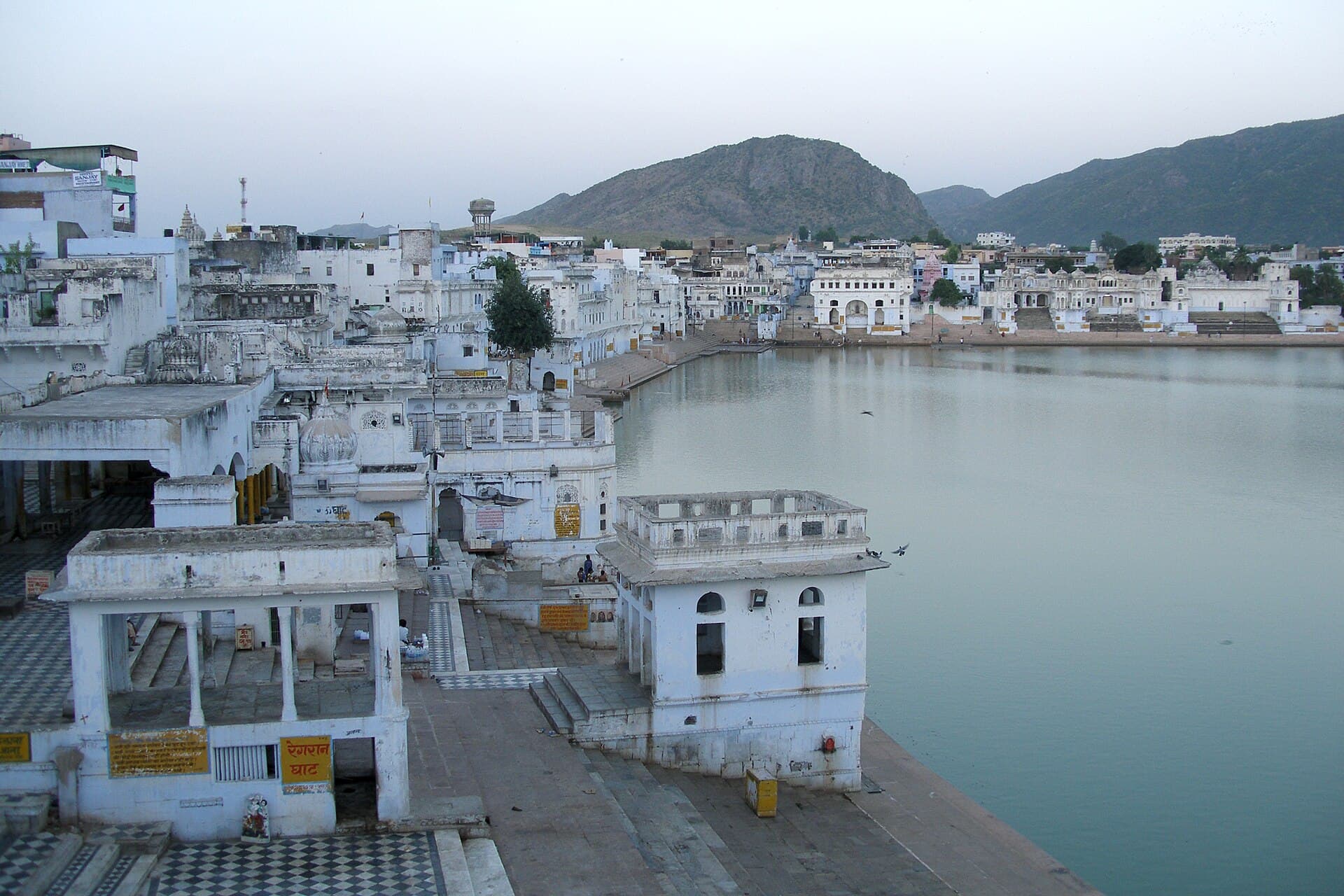
Ajmer has the shrine of Khwaja Moinuddin Chishti, one of the most revered Sufi shrines in South Asia, and Ana Sagar lake; Pushkar, over a small pass, has its holy lake ringed by ghats, the Brahma temple and a famous November camel fair. Our Jaipur to Ajmer and Pushkar guide has the route.
40. Ranthambore, Sambhar and Khatu Shyam
Ranthambore National Park, about 160 km south-east, is one of the best places in India to see a wild tiger (see Jaipur to Ranthambore). Sambhar, India's largest inland salt lake, about 80 km west, draws flamingos in winter. Khatu Shyam Ji, about 80 km north, is one of Rajasthan's most visited temples (see Jaipur to Khatu Shyam).
Other good outings include Samode (about 45 km) with its palace and fort; Bhangarh (about 85 km), the famous ruined town; Sariska (about 110 km) for forest and wildlife; Kanota Dam and Nevta Dam for birds; and Shekhawati, about three hours north, for its painted havelis in Nawalgarh, Mandawa and Fatehpur. Udaipur is a longer trip: see our Jaipur to Udaipur by road and train and places to visit in Udaipur guides.
Jaipur sights by time needed
| Place | Area | Time to allow | Best time of day |
|---|---|---|---|
| Amer Fort | Amer | 2–3 hours | Opening time, before the tour buses |
| Jaigarh Fort | Amer ridge | 1.5–2 hours | Late morning, after Amer |
| Panna Meena ka Kund | Amer | 20–30 minutes | Morning |
| Jal Mahal | Amer road | 20 minutes | Sunrise or late afternoon |
| Nahargarh Fort | Ridge above the Old City | 2 hours | Late afternoon to sunset |
| Hawa Mahal | Old City | 45–60 minutes | Early morning, sun on the facade |
| City Palace | Old City | 2 hours | Morning |
| Jantar Mantar | Old City | 1 hour | Morning or late afternoon |
| Albert Hall Museum | Ram Niwas Garden | 1.5 hours | Afternoon; outside view after dark |
| Birla Mandir and Moti Dungri | South city | 1 hour | Evening |
| Galta Ji | East hills | 1.5 hours | Late afternoon |
| Patrika Gate | Jawahar Circle | 45 minutes | Early morning |
| Chokhi Dhani | Tonk road | 3 hours | Evening |
Free and low-cost things to do in Jaipur
- Walk the Old City bazaars at opening time, when the shutters go up and the light is soft.
- Watch Hawa Mahal from the street or a rooftop cafe across the road.
- See Jal Mahal from the lakeside promenade.
- Join the evening aarti at Govind Dev Ji Temple.
- Visit Birla Mandir and Moti Dungri Ganesh Temple; entry to working temples is generally free.
- Walk through Ram Niwas Garden and see Albert Hall lit up at night.
- Climb to Garh Ganesh or the Surya Mandir above Galta for sunset.
- Stroll Jawahar Circle and Central Park in the evening.
How many days do you need in Jaipur?
| Days | What you can cover |
|---|---|
| 1 day | Amer Fort, Jal Mahal, Hawa Mahal, City Palace, Jantar Mantar and Nahargarh at sunset. Rushed but possible with a car. |
| 2 days | Day 1 Amer, Jaigarh, Panna Meena ka Kund, Jal Mahal, Nahargarh sunset; Day 2 Hawa Mahal, City Palace, Jantar Mantar, bazaars, Albert Hall and Birla Mandir |
| 3 days | Add Galta Ji, Patrika Gate, Royal Gaitor, a block-printing workshop and an evening at Chokhi Dhani |
| 4–5 days | Add a day trip: Abhaneri, Ajmer–Pushkar, Ranthambore or Sambhar, and a slow day at a private farmhouse with a pool |
Our Jaipur itinerary for 2 and 3 days has hour-by-hour plans, with costs.
Best time to visit Jaipur
Jaipur has a hot semi-arid climate. October to March is the season: days are warm and sunny, nights cool, and the sky clear. December and January nights can drop to single digits, so pack a jacket. April to June is very hot, often above 40°C in May and June; sightseeing is only comfortable early in the morning and after sunset. The monsoon, roughly July to September, brings short heavy showers, green hills and fewer tourists, with humid days in between. Big festivals are the Jaipur Literature Festival (usually late January), Makar Sankranti kite flying (14 January), Gangaur and Teej (dates follow the lunar calendar), Diwali, when the bazaars are lit up, and Holi. For a month-by-month table, see our best time to visit Jaipur guide.
How to reach Jaipur
- By air: Jaipur International Airport at Sanganer, about 12 km south of the Old City, has flights from most Indian metros and some Gulf cities.
- By train: Jaipur Junction is well connected to Delhi, Agra, Mumbai, Ahmedabad, Udaipur and other cities. Fast trains from Delhi take roughly 4 to 5 hours; check current timetables when you book.
- By road: Delhi to Jaipur is about 280 km on NH 48, roughly 5 to 6 hours. The new Delhi–Mumbai Expressway offers an alternative route for part of the way. Agra is about 240 km (about 4 hours); Udaipur about 395 km (6 to 7 hours).
Getting around Jaipur
App cabs and autos are easy to find. For Amer, Jaigarh and Nahargarh, which are spread over the hills, a car with a driver for the day is the most comfortable option and often not much more than several separate cab rides. The Jaipur Metro runs a single line from Mansarovar through the city to Badi Chaupar, useful for the Old City from the south-west. Within the walled city, walking and e-rickshaws are best; parking is difficult. Agree on auto fares before you set off, or use an app.
What to eat in Jaipur
Try dal baati churma, the classic Rajasthani meal of baked wheat balls, lentils and sweet crumbled wheat; pyaaz kachori for breakfast; ghewar, a honeycomb sweet best in the monsoon and around Teej; laal maas, the fiery mutton curry; ker sangri, a desert bean and berry dish; mirchi bada; and thick lassi served in clay cups. A Rajasthani thali gives you a taste of everything at once.
Tips for visiting Jaipur
- Start early. Amer Fort and Hawa Mahal are far more pleasant in the first hour after opening.
- Check whether a composite ticket still covers the places you plan to visit; it can save money and queues.
- Carry water, a hat and sunscreen, even in winter.
- Dress modestly for temples, and remove shoes where asked.
- Beware of touts offering "government" shops, gem deals or free tours; buy gems only with a certificate from a reputable store.
- Keep food hidden around monkeys at Galta, Nahargarh and Amer.
- Book Jhalana safaris, Chokhi Dhani and long-weekend stays in advance in December and January.
Frequently asked questions
What are the top places to visit in Jaipur?+
The top places to visit in Jaipur are Amer Fort with its Sheesh Mahal, Hawa Mahal, the City Palace, Jantar Mantar, Nahargarh Fort for sunset, Jaigarh Fort, Jal Mahal, Albert Hall Museum, Galta Ji and the bazaars of the Old City.
How many days are enough to see Jaipur?+
Two full days cover the main sights comfortably. Three days let you add temples, a stepwell, a workshop and an evening at Chokhi Dhani. With four or five days you can add a day trip to Abhaneri, Ajmer and Pushkar, Ranthambore or Sambhar.
Can I see Jaipur in one day?+
Yes, if you start early and hire a car: Amer Fort, Jal Mahal, Hawa Mahal, City Palace, Jantar Mantar and Nahargarh at sunset. It will be a long and rushed day.
Why is Jaipur called the Pink City?+
The walled Old City was painted terracotta pink, a colour associated with hospitality, to welcome the Prince of Wales in 1876. The colour is still maintained in the walled city today.
What is the best time to visit Jaipur?+
October to March is the best time to visit Jaipur, with November to February the most comfortable months. April to June is very hot, and July to September is the monsoon.
Which places in Jaipur are good to visit at night?+
Nahargarh Fort for sunset and city lights, Albert Hall Museum and Birla Mandir when they are lit up, Jal Mahal in the evening, the Amer Fort light-and-sound show, Chokhi Dhani and the Old City bazaars.
Is there a composite ticket for Jaipur monuments?+
The Rajasthan tourism department has sold a composite ticket covering several monuments such as Amer Fort, Nahargarh, Albert Hall, Jantar Mantar and Hawa Mahal. The price, validity and list of monuments change, so check the current details before you buy.
What are the best free things to do in Jaipur?+
Walking the Old City bazaars, viewing Hawa Mahal from the street, seeing Jal Mahal from the lakeside, visiting Birla Mandir and Moti Dungri Ganesh Temple, the evening aarti at Govind Dev Ji Temple and walking through Ram Niwas Garden are all free.
What are the best places to visit near Jaipur?+
Popular places near Jaipur include Abhaneri's Chand Baori, Samode, Sambhar Lake, Bhangarh, Ajmer and Pushkar, Ranthambore, Sariska and Khatu Shyam Ji.
Is Jaipur good for a family trip?+
Yes. Forts, palaces, Chokhi Dhani, Jhalana safaris and the bazaars suit all ages. A private farmhouse or villa with a pool gives children space to relax between sightseeing days.
What food is Jaipur famous for?+
Jaipur is famous for dal baati churma, pyaaz kachori, ghewar, laal maas, ker sangri, mirchi bada and lassi in clay cups. A Rajasthani thali is a good way to try several dishes.
Where should I stay in Jaipur for sightseeing?+
Stay near the Old City or on the Amer road to be close to the main sights. For families and groups, a private villa or farmhouse just outside the city gives more space, a pool and privacy, and is a short drive from the forts.
Where to stay in Jaipur
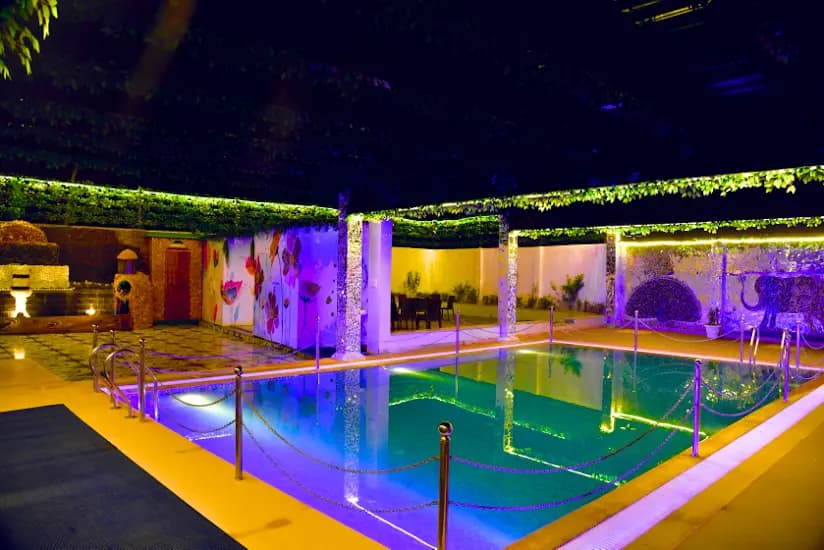
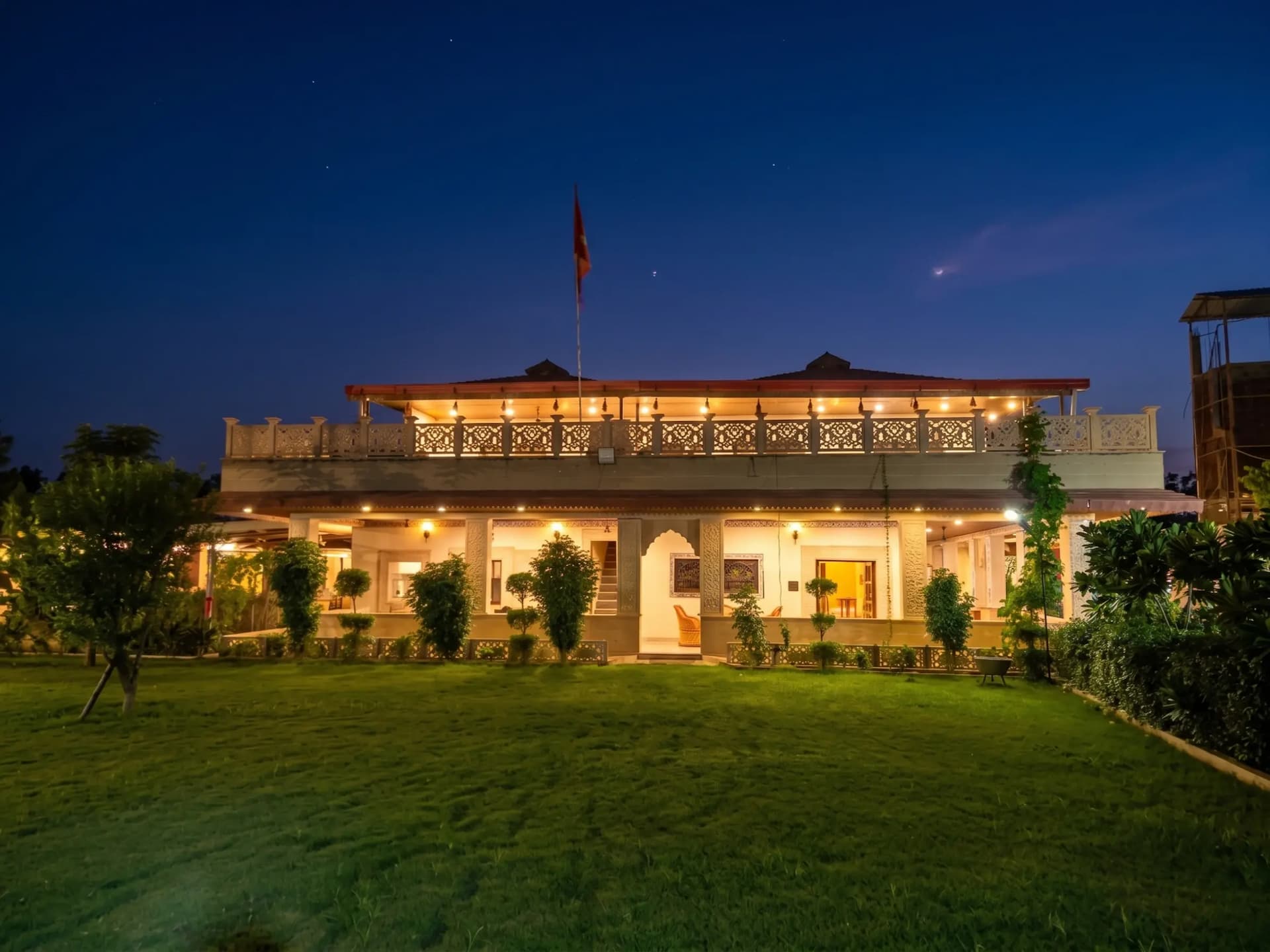
After a day of forts and bazaars, it is a relief to come back to a place of your own. A private villa or farmhouse around Jaipur gives a family or a group of friends a pool, a lawn and quiet evenings, and works out cheaper per head than several hotel rooms. The Amer farmhouse is a short drive from Amer Fort; the stays on the Agra road suit a trip that continues to Abhaneri; and the ones on the Ajmer road are on the way to Pushkar.
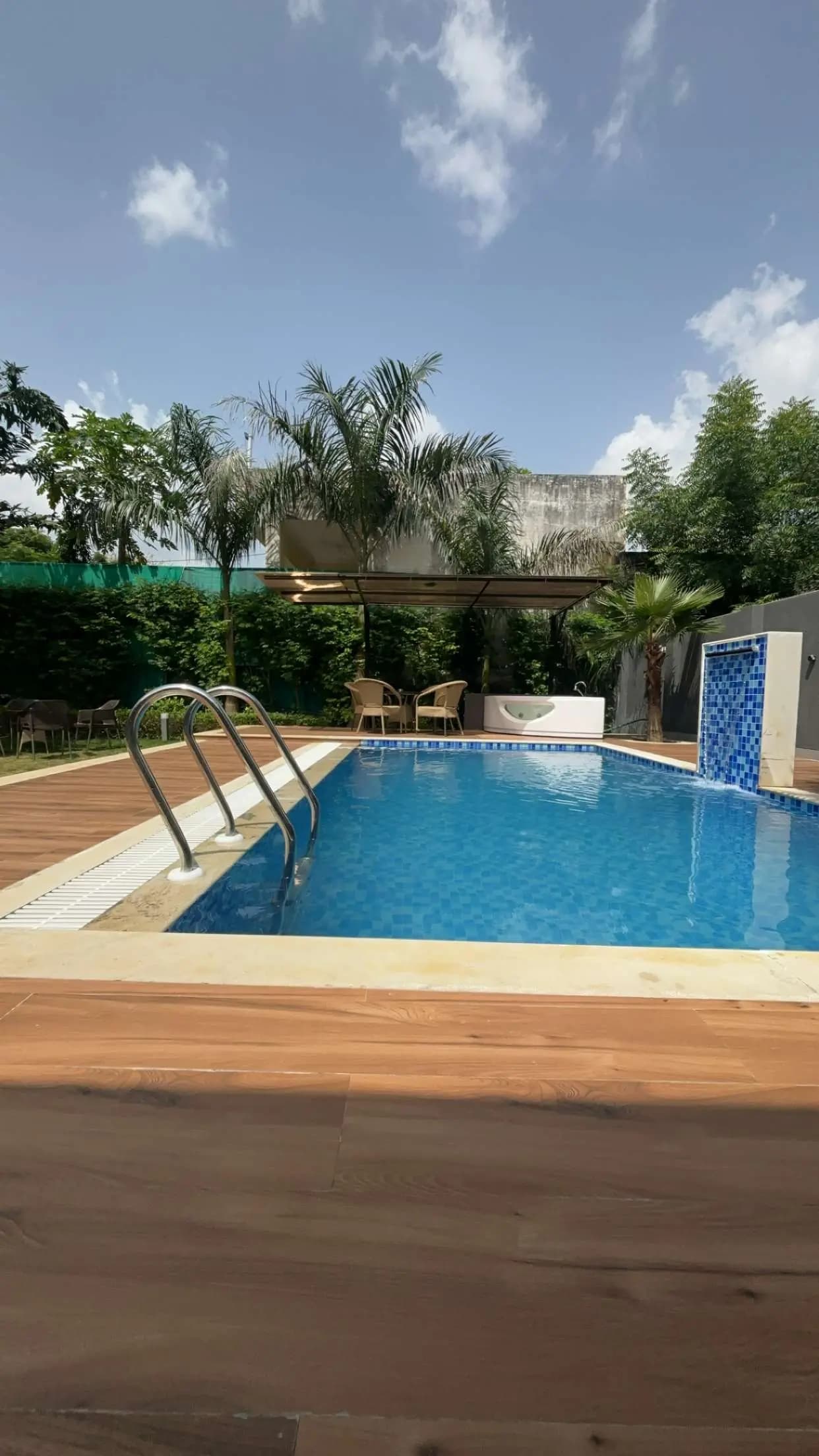
BookMyFarm lists 19 private stays in and around Jaipur: 13 farmhouses, 5 villas and 1 resort, spread around the city from Amer and Jaishingpura in the north to Chaksu on the Tonk road, Kanota and Bassi on the Agra road, and Bhankrota, Mundota and Jobner Road to the west. 14 have a private swimming pool, 3 share a pool, and 6 also have a separate kids' pool. Each is booked whole, for a day picnic or a night, and they sleep anything from 4 to 30 guests.
| Stay | Side of Jaipur | Sleeps | Pool | More in this area |
|---|---|---|---|---|
| Farmhouse in Amer, Jaipur – BMF-F410 | North, near Amer Fort | Up to 12 guests | Shared pool | stays in Amer |
| 2 BHK farmhouse with private pool in Jaishingpura, Jaipur – BMF-F534 | North | Up to 8 guests | Private pool + kids' pool | stays in Jaishingpura |
| Farmhouse with private pool in Jamdoli, Jaipur – BMF-F405 | East, below the Galta hills | Up to 10 guests | Private pool | stays in Jamdoli |
| Farmhouse with private pool in Kanota, Jaipur – BMF-F490 | East, on the Agra road | Up to 30 guests | Private pool + kids' pool | stays in Kanota |
| 6 BHK farmhouse with private pool in Bassi, Jaipur – BMF-F582 | East, on the Agra road | Up to 20 guests | Private pool | stays in Bassi |
| Farmhouse with private pool in Bhankrota, Jaipur – BMF-F451 | West, on the Ajmer road | Up to 15 guests | Private pool + kids' pool | stays in Bhankrota |
| Farmhouse with private pool in Mundota, Jaipur – BMF-F267 | West | Up to 12 guests | Private pool + kids' pool | stays in Mundota |
| 2 BHK villa with private pool in Jagatpura, Jaipur – BMF-V619 | South-east | Up to 15 guests | Private pool | stays in Jagatpura |
| Villa with private pool in Ring Road, Jaipur – BMF-V346 | South-west, off the Ring Road | Up to 9 guests | Private pool | stays in Ring Road |
| If you want | Look at |
|---|---|
| A stay close to Amer Fort | stays in Amer and stays in Jaishingpura |
| A luxury villa | luxury villas in Jaipur |
| A farmhouse with a private pool | pool farmhouses in Jaipur and private pool villas in Jaipur |
| A birthday or a party | farmhouses for birthday parties in Jaipur and farmhouses for large groups |
| A couple's staycation | couple-friendly villas in Jaipur |
| A budget day out | budget farmhouses in Jaipur |
| A family get-together | stays for family get-togethers in Jaipur |
At the time of writing, most Jaipur stays cost roughly ₹5,000 to ₹13,500 for a weekday booking and ₹6,000 to ₹18,500 on weekends. A small garden farmhouse for four starts below ₹3,000, and the largest farmhouse, with six bedrooms, is around ₹20,000 to ₹25,000. Diwali, Christmas, New Year and Holi cost more and fill first. Prices change, so check the live rate on each listing. Browse every farmhouse in Jaipur, every villa in Jaipur and the resort stays in Jaipur, or see all of them on the Jaipur stays page. For a closer look at the areas, read our Jaipur farmhouse and villa guide to areas and prices.
More Jaipur guides
- जयपुर में घूमने की जगह (Jaipur guide in Hindi)
- Jaipur itinerary: 2 and 3 day trip plans
- Best time to visit Jaipur, month by month
- Places to visit near Jaipur: day trips within 200 km
- Amer Fort guide: what to see and how to reach
- Nahargarh Fort guide: sunset, Jaigarh and the ridge
- Temples in Jaipur: Galta Ji, Birla Mandir, Akshardham, Moti Dungri
- Places to visit in Jaipur at night
- Jaipur shopping markets and food guide
- Jaipur to Ranthambore: distance and safari trip
- Jaipur to Ajmer and Pushkar: distance and day trip
- Jaipur to Agra via Abhaneri and Bharatpur
- Jaipur to Khatu Shyam: distance, route and Salasar Balaji
- Jaipur to Jodhpur by road, with a Jaipur distance chart
- Farmhouse in Jaipur for a party or day picnic
- Villa in Jaipur with a private pool