

When to Book: A Season-by-Season Guide to Farm Stays
Which markets work in the monsoon, which in winter, and when each is cheapest — a seasonal guide to booking farmhouses and villas in India.
Almost every mistake in this category comes from importing hotel assumptions. Hotels sell rooms by the night at a published rate. Farmhouses sell whole properties in time slots, at prices that change with the day of the week, under rules written by one owner who probably lives nearby.
Across the properties we list, weekday rates range from a median of around ₹1,143 in Bikaner to about ₹39,600 in Ratnagiri. The same brief — four bedrooms, a private pool, sleeps fifteen — genuinely costs two to three times as much in one market as another.
What each season is actually for
Between June and September the Western Ghats belt is at its best and its most crowded, and rates hold firm because demand is real. Everywhere else this is low season: local weekend markets around the big cities are cheaper and emptier than at any other point, and the properties that suffer are the ones whose entire outdoor offer is a lawn. October to February is the good stretch almost everywhere. Rajasthan, Goa, the coast and the wildlife parks come into their season; the local belts are comfortable from mid-morning to late evening; and this is when the pools everyone paid for are genuinely usable. March to June is pool-and-air-conditioning season across the plains. An open lawn in Gujarat, Rajasthan or Telangana is not a venue between eleven and six, and the properties that work are the ones with shade over part of the pool and effective cooling in every room.
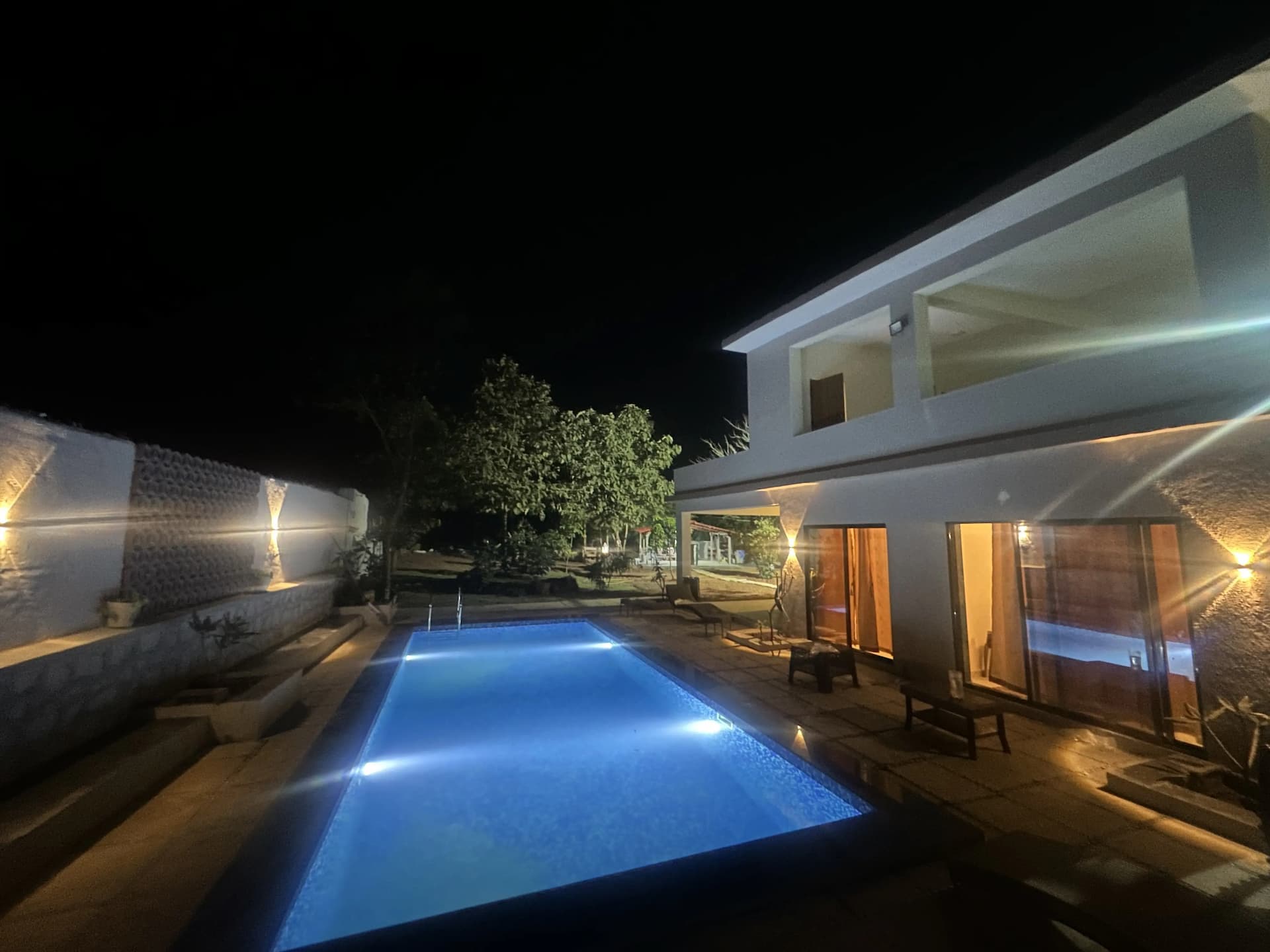
Palghar at a glance
| Properties listed | 2 |
| Areas covered | 2 |
| With a private pool | 2 of 2 |
| Weekday rates | ₹12,090 – ₹12,320 |
| Typical (median) | ₹12,320 |
| Day capacity | 20 – 20 guests |
| Best season | Monsoon for the green; November to February for the coast; chikoo season is October to February |
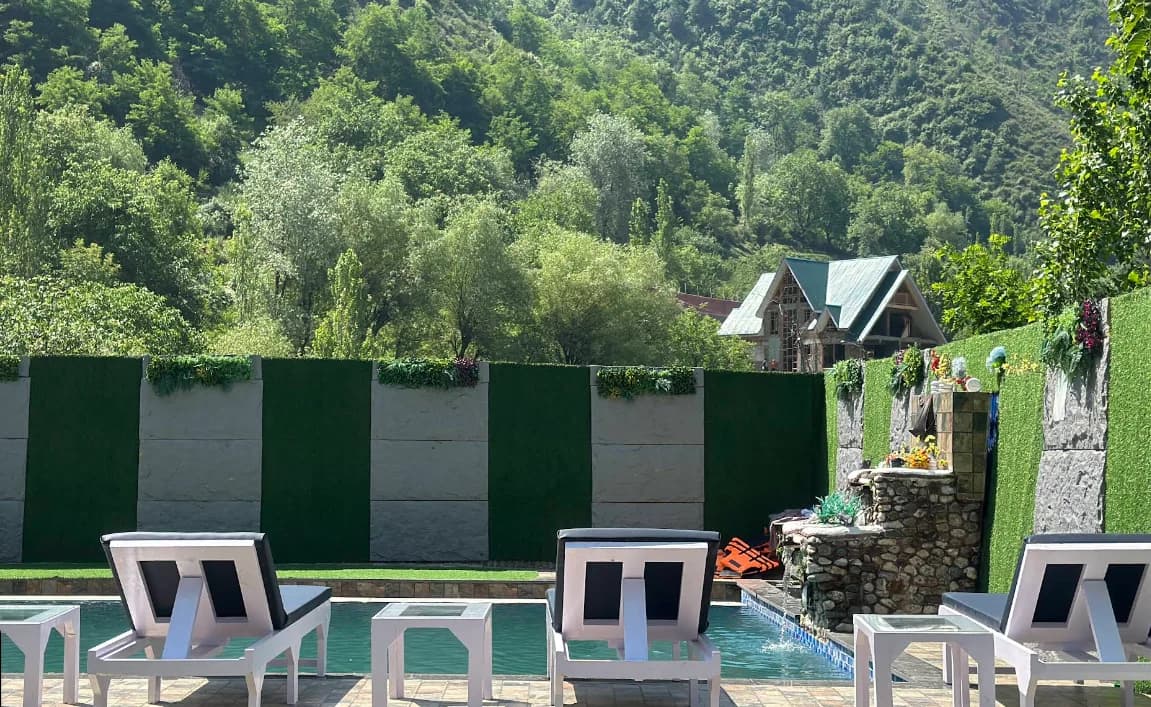
Of 138 properties, 106 have a private swimming pool and 67 a separate children's section. 18 have a home theatre and 23 a game zone — the two that carry a wet afternoon.
What to prioritise, by season
- Monsoon Covered outdoor seating first, indoor space second, power backup third. Treat the pool as insurance rather than the plan — unless there are children, who swim regardless.
- Winter Lawns, bonfires and outdoor dinners. Ask about heating rather than assuming; most properties here are equipped for heat, not cold.
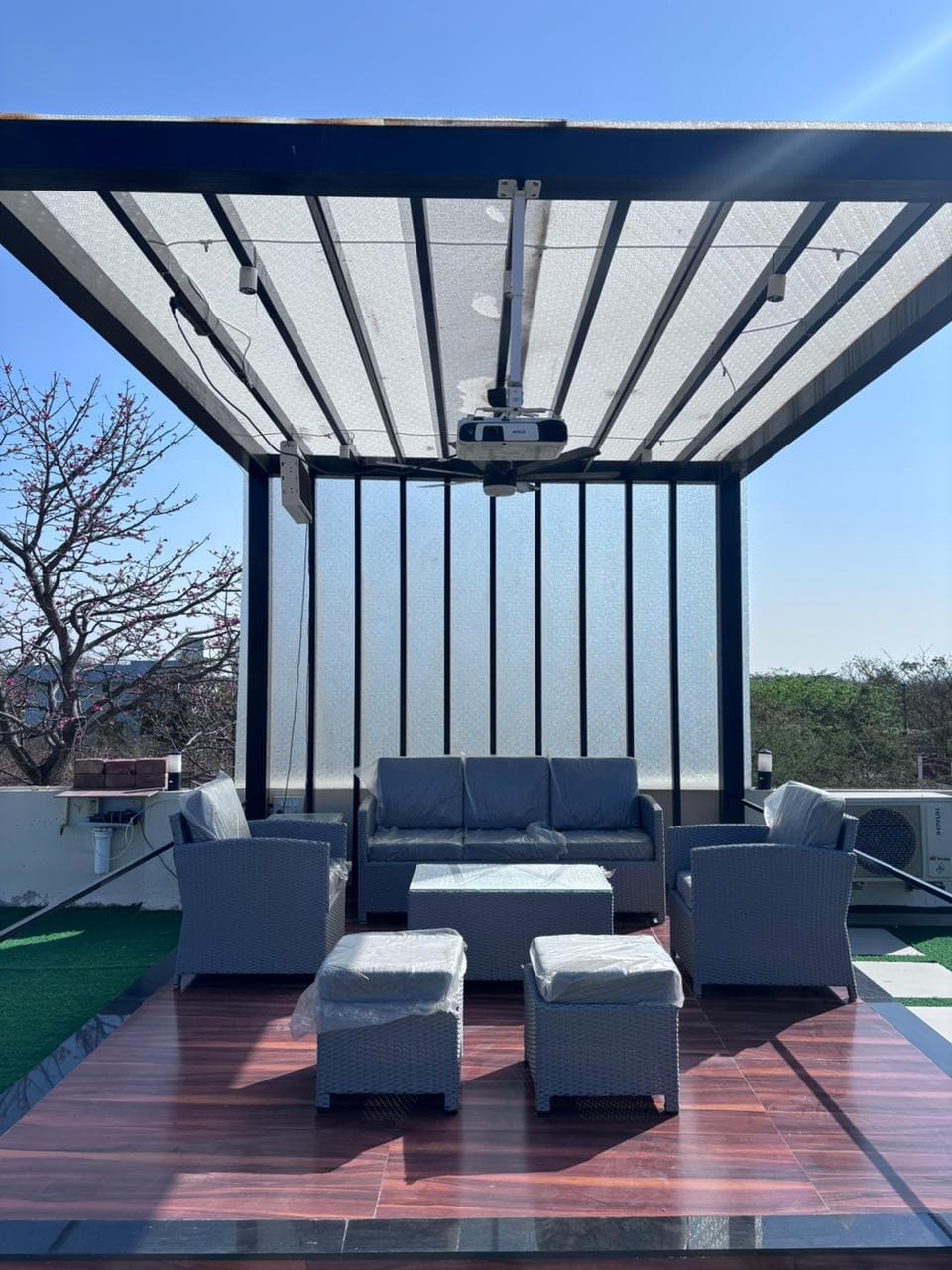
- Summer Air conditioning room by room, and shade over the pool. Partial AC coverage is common and it is not a small difference in May.
- Shoulder months October and March are the underrated ones — good weather, and rates that have not moved into the festival band.
Timing the booking itself
Three to four weeks is comfortable for an ordinary weekend. Six to eight for anything attached to a festival or a long weekend. Longer still for the Diwali period and the last week of December, which are the two hardest dates in the calendar. The reason is simple arithmetic rather than demand alone. A city may list fifty properties but only six or eight that take fifty guests, and those six are competing for every function, reunion and large family gathering in that city on that date. Flexibility is worth more than budget at that scale. Moving a booking from a Saturday to a Friday, or from the festival weekend itself to the weekend after, routinely converts nothing available into a choice of three.
What you can check before you pay
The thing that removes most of the anxiety from a booking like this is being able to see the detail up front. Every listing carries the slot rates split by weekday and weekend, the per-person charge above the included headcount, the security deposit, the platform fee, the day-time and night-time guest limits, the room-by-room amenity list and the owner's own house rules. None of it is behind an enquiry form.
That matters because the questions that actually decide a booking — can we bring food, can we cook, is alcohol allowed, are pets permitted, what time does the music have to stop — are answered on the page rather than after a phone call.
Ask the owner directly
Every property has a chat thread attached to it. Use it before booking rather than after — owners field these questions constantly and answer quickly, and it is far more reliable than a broker's summary.
The single most useful question, and the one almost nobody asks: what usually goes wrong at bookings here? Owners have watched hundreds of them and will tell you the specific local answer.
The weekend after is the one nobody books
Every festival has a recovery weekend, and it is consistently harder to book than people expect. After a fortnight of being out every night, everyone wants one quiet weekend. The weather immediately after a festival period is often the best of the year. And the overnight bookings suppressed during the festival all arrive at once. The practical version: if you want the weekend after a big festival, book it weeks before the festival itself. By the time it finishes, the good properties in the popular belts are taken and what remains is what nobody wanted. The same logic runs the other way for the festival dates themselves — those are best booked six to eight weeks out, which almost always means a month earlier than feels necessary.
Comparing a few of these
| Property | Where | Sleeps / by day | From (weekday) | Pool |
|---|---|---|---|---|
| Moksha | Wada, Palghar | 12 / 20 | ₹12,090 | Private |
| BMF-F518 | Cherry Tre Resort, Srinagar | 20 / 20 | ₹4,400 | Private + kids |
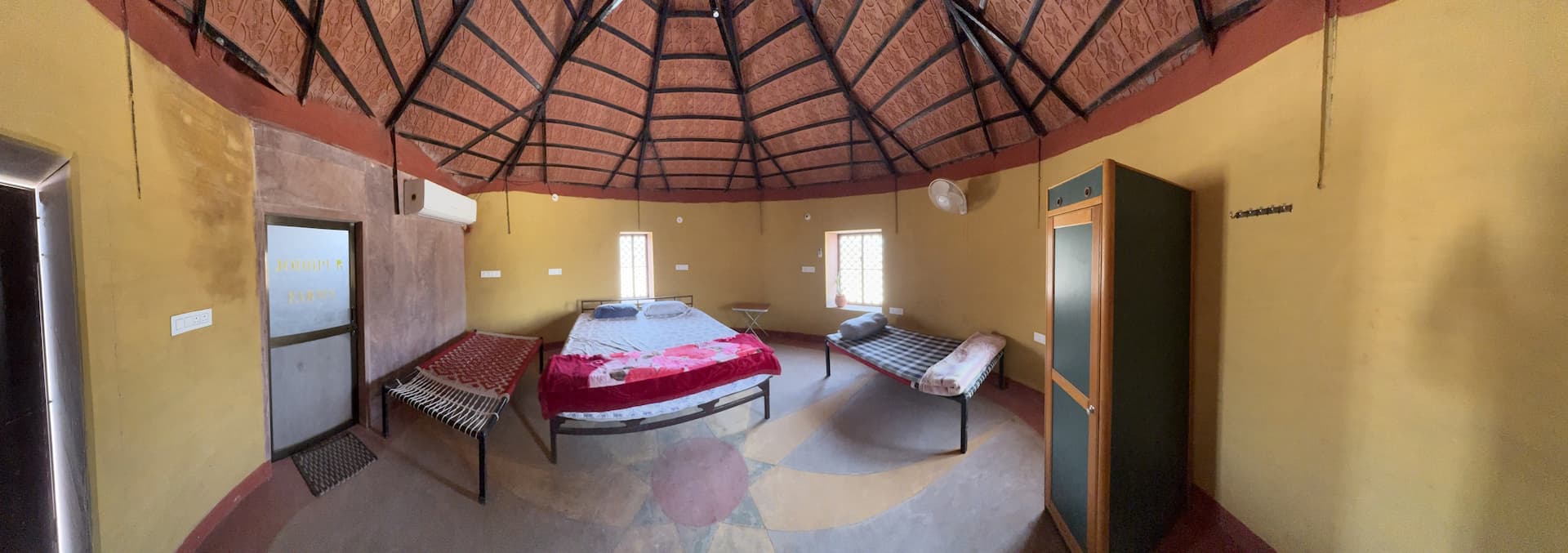
| Jodhpur Farms | Pithawas, Jodhpur | 16 / 16 | ₹13,200 | Private + kids |
| Kaash Stay Villa | Tricone City, Indore | 8 / 8 | ₹7,031 | — |
| Sanskar Heritage Villa | Bhandaria, Bhavnagar | 12 / 12 | ₹17,600 | Private + kids |
Work the total out for your actual headcount before comparing these. Above roughly twenty guests the per-person charge reorders the list more often than not.
Where to book it
Everything described here is on the BookMyFarm app and the website — farmhouses, private villas, resorts and weekend homes across the country, searchable by city and by area in your own city.
It is worth saying why people end up using it as an Airbnb alternative rather than as a supplement. Nightly-rate platforms cannot sell you a half day or a full day, cannot show a day-time guest limit that differs from the sleeping capacity, and cannot put you in a chat with the owner before you pay. All three of those are the normal way this category works.
Where to look
The value end:
- Bikaner — weekday median around ₹1,143
- Manali — weekday median around ₹1,320
- Mathura — weekday median around ₹1,759
- Raigad — weekday median around ₹2,200
The upper end:
- Kandukur — weekday median around ₹30,800
- Kolar — weekday median around ₹32,550
- Goa — weekday median around ₹34,000
- Ratnagiri — weekday median around ₹39,600
Or browse farmhouses · villas · resorts · how booking works.
You talk to the owner, not a broker
Chat is built into every listing, which means the answer to "can our caterer come in at nine" comes from the person who will actually open the gate. There is no agent in the middle relaying a version of the question, and no commission-hungry intermediary steering you towards whichever property they represent.
Practically, it is the fastest way to resolve the things a listing cannot cover — an early check-in, a decoration plan, whether a particular road floods, what the group before you got wrong.
Whole property, stated plainly
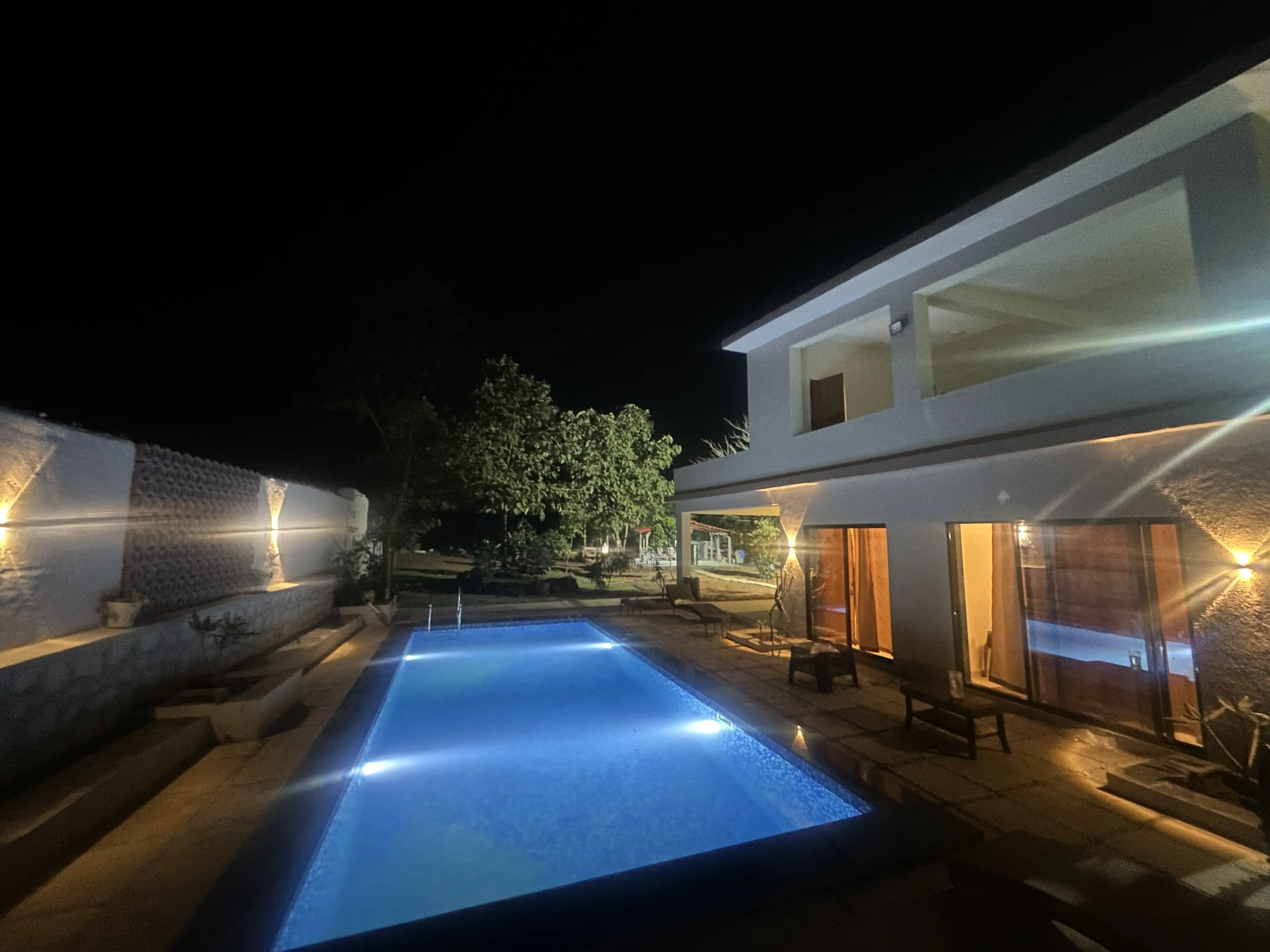
When you book here the entire property is reserved for your group — the listings say so explicitly, and the property FAQs repeat it. You are not sharing a pool with another family or a lawn with a second booking.
That is a meaningful difference from a room-based platform, where "entire place" can still mean a unit inside a compound, and from resort day-passes, where the pool is shared by definition.
If the stay goes well, leave a review and tell people which property it was. Owners in this market live on repeat bookings and recommendations far more than on advertising, and a specific recommendation — the property, the area, what it cost, what to watch out for — is worth considerably more to the next family than a five-star rating on its own.
Frequently asked questions
Is kitchen access available at Moksha?+
Moksha does not provide kitchen access. You can order food or arrange catering instead.
Can we play music at the property?+
Music is allowed at Moksha, but guests should keep the volume at a reasonable level as per local guidelines.
Is the swimming pool available at Moksha?+
Yes, the swimming pool at this Farmhouse is private and available for your exclusive use. It is regularly cleaned and maintained for guests visiting Palghar.
Are pets allowed at Moksha?+
Yes, Moksha is a pet-friendly property. You can bring your pets along for the stay. Please check for any specific restrictions or additional charges before booking.
How many people can Moksha take?+
It is listed for 20 guests on a day booking and 12 overnight. A day booking is limited by garden, parking and washrooms; an overnight is limited by beds. If nobody is staying the night, the day figure is the one to search on.
What does Moksha cost?+
The slot rate is ₹12,090 on a weekday and ₹13,950 at the weekend. Above the included headcount there is a per-person charge of ₹300 a head, which at a large group moves the total more than the base rate does.
Can I book for the day without staying the night?+
Yes. Most properties sell a half day and a full day as well as an overnight, and the day slot is what a birthday or a family lunch usually needs. It is also why the day-time guest limit is often several times the sleeping capacity.
Is the whole property mine, or is it shared?+
The whole property is reserved for your group. The listings state this explicitly and the property FAQs repeat it — you are not sharing a pool or a lawn with another booking.