

How to Earn from a Farmhouse in India: Rental Income, Costs and Profit (2026)
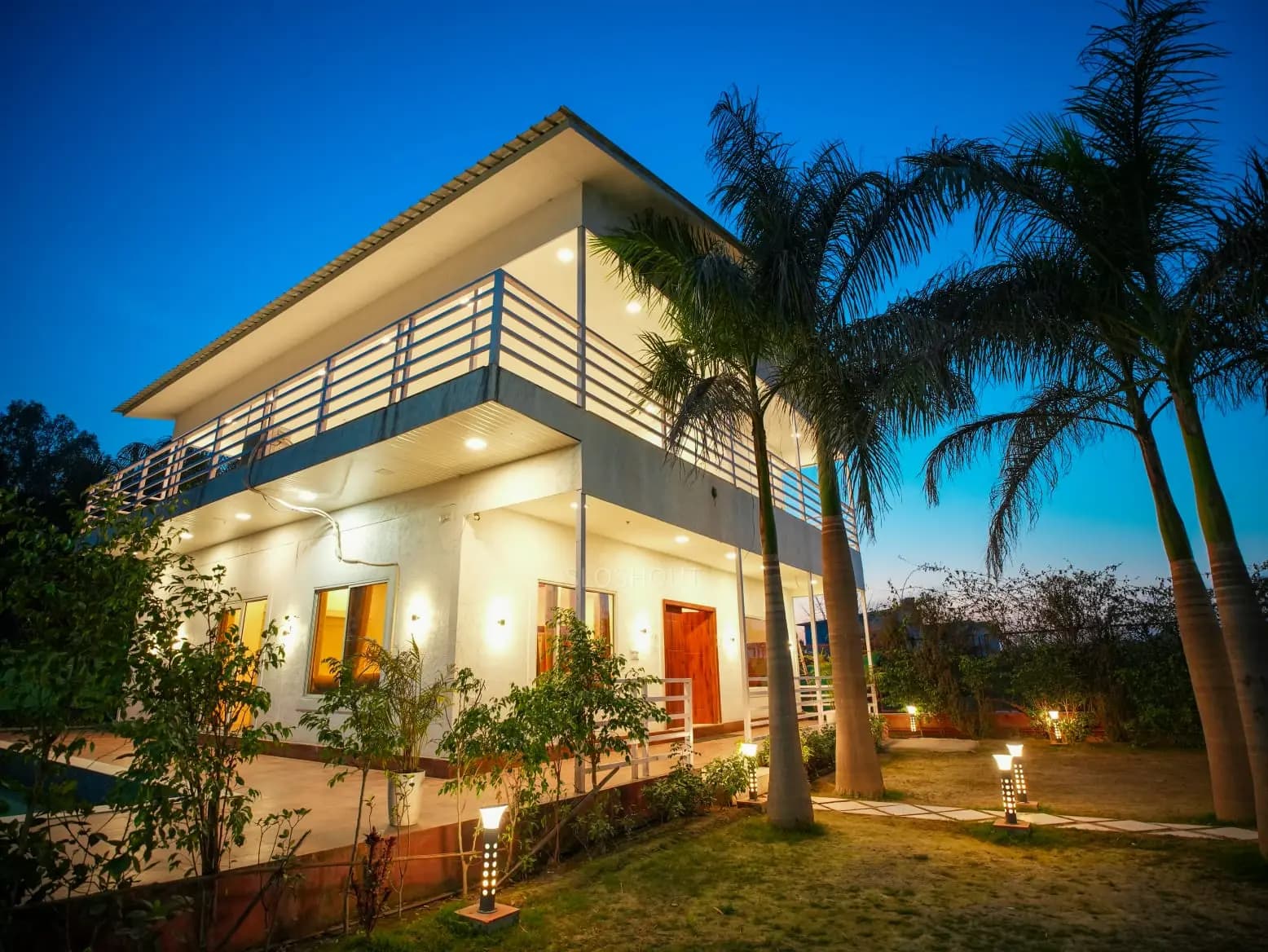
Farmhouse rental income in India explained: real price bands by city, earnings scenarios, monthly costs, break-even, legal basics and a 30-day launch plan.
Own a farmhouse, villa or weekend home? This guide shows the real maths. List your property on BookMyFarm for free: no listing fee, commission only on confirmed bookings, and you set your own prices and dates.
A private farmhouse in India can earn anything from a few thousand rupees a month to several lakh a year from short-stay rentals: day picnics, overnight stays, birthday parties, family get-togethers and small events. What it actually earns depends on five things you can measure before you spend a rupee: where it is, what it has (a private pool matters most), how many guests it holds, how many days a month you can realistically fill, and what it costs you to run. This guide walks through all five with real price bands from BookMyFarm's own listings, worked earnings scenarios for low, medium and high occupancy, a full monthly cost breakdown, the setup costs if you are starting from scratch, the legal and tax basics, and a 30-day launch checklist.
For a quick number for your own property, try the host earnings calculator, then come back here for the detail. It is written for owners who already have a farmhouse, villa or weekend home that sits empty most of the week, and for people thinking of buying or building one as a business. We are a booking platform, so we will tell you where listing with us fits, but the maths here works the same whichever channel your guests come from.
The short answer: how much can a farmhouse earn?
Three numbers decide it: your average rate per booking, your bookings per month, and your monthly running cost. Revenue is rate × bookings; profit is revenue minus platform commission, minus per-booking costs (cleaning, laundry, electricity for the day), minus fixed costs (caretaker, maintenance, property tax).
From BookMyFarm's own listings, typical weekday rates for a whole farmhouse fall into four bands (from our farmhouse price guide by city):
Weekend rates are usually 25–50% higher than weekday rates, and on some properties exactly double. Festival dates (Diwali, Christmas to New Year, long weekends) go higher still. These bands are observed asking rates on the platform, not a guarantee of what a new listing will achieve.
Worked earnings scenarios (illustrative)
Take a 3 BHK farmhouse with a private pool and a lawn, sleeping 15 and hosting up to 30 by day, in an upper-middle market. Assume a weekday rate of ₹10,000 and a weekend rate of ₹14,000. Most farmhouses fill weekends first; weekdays come later, from office outings, birthdays and families with flexible dates.
Illustrative scenario only: these are example numbers to show the maths, not a forecast or a promise of bookings or income on BookMyFarm or anywhere else.
A "booking" here can be a day slot or a night. Many farmhouses sell a day picnic and an overnight on the same date, which can lift the totals; see how day and overnight slots work. Real calendars are seasonal: a pool farmhouse near Surat or Hyderabad peaks from March to June, a Lonavala or Karjat villa in the monsoon, and Udaipur or Jaipur from October to March. Do the maths per month, not just per year.
From revenue to profit
Here is the same "steady" month, taken down to what you keep. The commission line is shown at three generic rates so you can see the sensitivity; use the actual rate in your own owner agreement, whichever platform you list on.
Illustrative scenario only: these are example numbers to show the maths, not a forecast or a promise of bookings or income on BookMyFarm or anywhere else.
The lesson in the table: the commission rate matters less than occupancy. Going from 6 to 11 bookings a month changes profit far more than a five-point difference in commission. That is why reach (how many guests see your property) is usually worth paying for.
The break-even point
Fixed costs run whether you have guests or not. In this example, fixed costs of ₹38,000 a month divided by what each booking contributes after commission and per-booking costs (roughly ₹8,000–₹10,000) means you need about 4 to 5 bookings a month just to cover the running cost. If you already pay a caretaker and maintain the pool for your own use, your real break-even is much lower, because those costs exist anyway. That is the strongest argument for renting out a farmhouse you already own.
What it costs to run a rental farmhouse
Typical monthly costs for a 3–4 BHK farmhouse with a pool, outside a large city. Your numbers will differ by region and size; this is a checklist of the lines to budget, with rough ranges.
Per-booking costs come on top: cleaning and laundry (₹800–₹2,000), the electricity of a full day of AC and music, consumables (toiletries, garbage bags, drinking water), and any housekeeping staff you call in for large groups. Many hosts charge a refundable security deposit at check-in to cover breakage; on BookMyFarm listings this is commonly ₹3,000–₹5,000 (see how the final bill and deposit work). The Host Policy is clear that damage claims are settled between host and guest, so set your deposit and rules accordingly.
What earns the most: the features guests pay for
Setup cost if you are starting from scratch
If you are converting an existing farmhouse, most of the investment is furnishing and safety. Rough one-time budgets for a 3 BHK:
These are planning ranges, not quotes; get local quotes before you commit. A pool is the only big-ticket item that clearly pays for itself in most markets, but check that your local rules and land use permit one.
Ready to try it with your own property?
If the numbers above work for your property, the next step costs nothing. Start your free listing with your mobile number; you can save a draft and finish later.
Which channel: direct, brokers or booking platforms
Most successful hosts use more than one. If you do, keep one master calendar and sync it, or you will double-book a Saturday sooner or later. Our Airbnb alternative guide for villa owners compares the options in detail.
Legal, tax and safety basics (summary)
Rules differ by state and by how you operate, so treat this as a checklist of questions, not legal advice. Check current rules with a chartered accountant and your local authority before you start.
Honest pros and cons of renting out your farmhouse
30-day launch checklist
Seven mistakes that cost owners money
Is my property a good fit? A quick self-test
Four or more good signs and the maths above should work for you. If the property is a villa or apartment in a gated society, check the society's rules on short-stay guests first; our villa rental business guide covers that case, and the weekend home guide covers renting a second home you also use yourself.
How BookMyFarm fits
BookMyFarm was built for exactly this kind of property: private farmhouses, villas and weekend homes booked whole, for day picnics, nights, birthdays and family get-togethers. Guests find properties through city and area pages, collections such as pool farmhouses and party farmhouses, search and the app. You can see what guests see on pages like farmhouses in Delhi NCR, farmhouses in Surat and villas in Lonavala, and the full list of cities in our city index.
Growing income after launch
Once the first month is done, the levers are the same for every host:
Our guide on how to get more bookings for your farmhouse or villa goes deeper on each.
Earnings by property type (illustrative)
Illustrative scenarios only, built from the observed BookMyFarm price bands above; not forecasts.
The value-market farmhouse can still do well because demand is local and repeat: families from the same city book it again and again for birthdays and Sunday picnics. Premium properties earn more per booking but also cost more to run, furnish and staff, so their break-even is higher.
A year of seasons: how monthly income moves
Occupancy is not flat across the year. A typical pattern for a pool farmhouse near a city in western or northern India looks like this (illustrative):
Plan cash flow around this. A good October to December can carry a weak January, and the money from summer pool days pays for the monsoon repairs.
Running it yourself vs hiring a manager
There are three ways to operate a rental farmhouse day to day:
Whatever you choose, keep the listing and payouts in your own name so you can see every booking.
Five owner profiles: which approach fits
What guests ask before they book (answer these in your listing)
Every question you answer in the listing is one less phone call, and one less reason for the guest to book somewhere else. The listing tips guide has a template.
How to model your own farmhouse in 15 minutes
If the slow case still covers your fixed costs, renting out is low-risk. If only the strong case works, improve the property (pool, photos, capacity) before you rely on rental income. The host earnings calculator gives a quick first estimate.
Day slots vs night stays: which earns more?
Selling both is usually the fastest way to lift monthly income without raising prices.
Signs your farmhouse is under-earning
List your property on BookMyFarm
BookMyFarm is an Indian booking platform for private farmhouses, villas, resorts and weekend homes, founded in 2024 in Surat, with listings in 70+ cities and 100,000+ app downloads. It is a DPIIT-recognised startup. Guests use it to book a whole farmhouse or villa for a day picnic or a night, and resorts by the room. Here is what the platform itself says about hosting:
How to start: 1) sign in with your mobile number on the list your property page; 2) add details, photos, prices, timings and house rules (save a draft any time); 3) the team reviews the listing and property; 4) start taking bookings and manage everything from the owner dashboard. Read the terms of service and the Host Policy shown in the owner app before you go live, and see how BookMyFarm works for the guest side.
Want a quick estimate first? Try the host earnings calculator. There are pages for each kind of property, listing a farmhouse, listing a villa and listing a resort, and city pages for farmhouse owners in Surat, Hyderabad, Delhi NCR, Lonavala, Udaipur, Ahmedabad, Jaipur and Daman. Everything about hosting is summarised on list your property.
More guides for property owners
- Farmhouse rental business, step by step
- How to start a homestay business in India
- Homestay registration and licence: what owners need
- Villa rental business: costs, pricing and profit
- Airbnb alternative for villa and farmhouse owners in India
- How to get more bookings for your farmhouse or villa
- Farmhouse rental pricing guide for owners
- Farmhouse listing photos and description tips
- GST, income tax and insurance for farmhouse rentals
- Guest verification, house rules and safety for hosts
- Weekend home rental income: renting your second home
- Farmhouse se paise kaise kamaye (Hinglish guide)