

What an "Active Kitchen" Actually Means on a Farmhouse Listing
Kitchen access is one of the most misread lines in this category. What the term covers, what it never includes, and the questions that prevent a bad surprise.
One phrase, three different realities
Scroll any farmhouse listing and you will find a line about the kitchen. "Active kitchen". "Kitchen facilities available". "Fully equipped kitchen with utensils". "Kitchen with cooking utensils". These sound interchangeable. They are not, and the gap between them is where a lot of group bookings go wrong — usually at around eleven in the morning, when a caterer arrives and finds a locked door, or when twelve people discover there is no gas. Food is the single largest practical component of a farmhouse booking. It is worth ten minutes of reading before you pay.
What "active kitchen" usually means
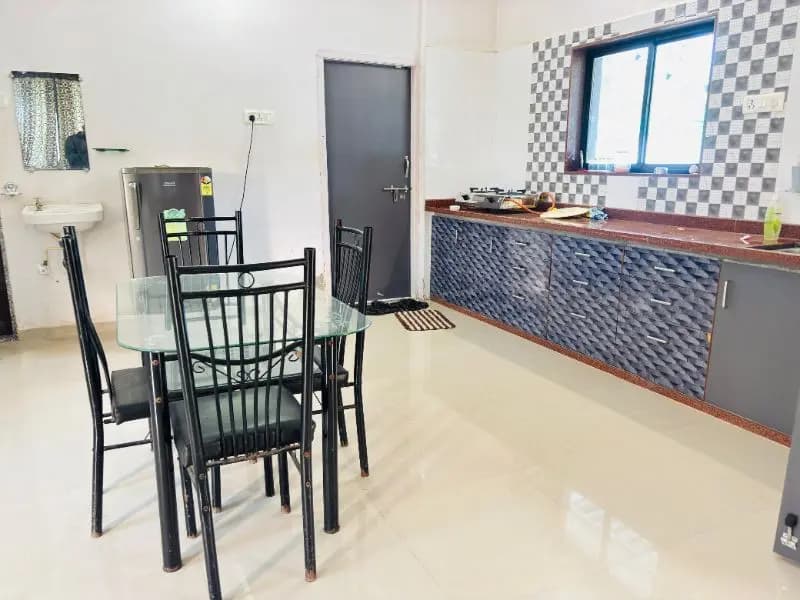
In practice, on our listings, an active kitchen means a kitchen that is connected and working rather than decorative. The specific inventory varies, but the properties that spell it out tend to list some combination of:
- A gas stove or induction cooktop
- A refrigerator
- Utensils, plates and cutlery
- A water filter or RO unit
- A dining table
The more detailed listings itemise it. One Surat property specifies an equipped kitchen with fridge, water filter and utensils. A Karjat property lists a fridge, induction cooktop and oven. A Lonavala villa lists gas, fridge, spoons and plates. That level of detail is a good sign — it usually means the owner has been asked enough times to write it down.
Surat at a glance
| Properties listed | 6 |
| Areas covered | 4 |
| With a private pool | 6 of 6 |
| With a children's pool | 3 of 6 |
| Weekday rates | ₹4,650 – ₹29,400 |
| Typical (median) | ₹9,299 |
| Day capacity | 20 – 250 guests |
| Best season | Best October to February; March to June needs a covered or shaded pool; the monsoon is green, quiet and cheap |
What it almost never includes
- Ingredients. Obvious when stated, routinely assumed otherwise. Bring everything, including oil, salt and tea.
- Gas cylinders as a guarantee. At least one property states plainly that cylinders are not always available. Ask.
- A cook. Some properties can arrange one at a charge; most cannot at short notice.
- Cleaning up after you. Standard cleaning between bookings is included. Washing the vessels you used is generally not — one property specifies a flat charge if utensils are left dirty.
- Capacity for a caterer. A kitchen sized for a family making dinner is not a kitchen sized for someone producing eighty plates.
The three arrangements, and which you are getting
1. Cook it yourself
The kitchen is available and you use it. Best for groups of eight to twenty who actually want to cook, and genuinely the cheapest way to feed a group. For a two-night stay it is also the thing people remember most fondly.
2. Bring it in, do not cook it
Outside food is permitted; the kitchen is not for guest use. You bring prepared food or a caterer delivers. The most common arrangement and usually the most practical above twenty-five people.
3. In-house catering only
The property provides food and outside food is not permitted. Simplest to run and least flexible. Several of the larger properties operate this way, and a few in the Gir belt include all meals in the room rate.
These are three different products. "Outside food allowed" and "cooking allowed" are separate permissions on our listings, and a property can grant either, both or neither.
The vegetarian question, which sits on top
Independently of whether you may cook, a good number of properties across Gujarat, Rajasthan and parts of Maharashtra are vegetarian-only. And the rule sometimes splits further: some properties permit non-vegetarian food to be brought in but not cooked on the premises, which is listed as a separate line.
For a mixed group this needs settling before booking rather than at lunchtime. It is stated on every listing and it varies between properties on the same road.
Alcohol works the same way and is worth checking in the same message — with the reminder that state law sits above the property rule.
How to ask, in one message
Five lines, and owners answer them constantly: Is the kitchen available for guest use, and what is in it — gas, fridge, utensils? Is outside food allowed? Can a caterer come in, and do they need access before check-in? Is the property vegetarian-only, and does that apply to food brought in as well as cooked? Is there any charge for kitchen use, utensils or cleaning afterwards? That covers essentially every food-related dispute in this category, and it takes less time than reading a second listing.
Why it matters more in some seasons than others
Two situations turn the kitchen from a convenience into the deciding feature.
The monsoon. Delivery to a rural property in heavy rain is unreliable and sometimes impossible — roads flood, riders will not come, and a restaurant showing as open on an app may not serve a rural pin at all. Between June and September a working kitchen is the difference between dinner and a problem.
Remote destinations. Igatpuri has almost nothing within walking distance of most properties. Karjat has far fewer restaurants and delivery options than Lonavala. In those belts, plan every meal around the property rather than around finding somewhere.
Conversely, in the city-adjacent belts — Kamrej, Moinabad, Noida — delivery generally works and the kitchen matters less.
Comparing what Surat offers
| Property | Where | Sleeps / by day | From (weekday) | Pool |
|---|---|---|---|---|
| HappyPlay | Olpad | 15 / — | ₹4,185 | Private |
| Blue-Berry | Kamrej | 20 / 20 | ₹5,572 | Private |
| Mango | Kamrej | 20 / 20 | ₹4,749 | Private + kids |
| Velvet Skies | Palsana | 20 / 20 | ₹29,400 | Private + kids |
| PartyPatch | Dumas | 25 / 50 | ₹9,800 | Private |
Work the total out for your actual headcount before comparing these. Above roughly twenty guests the per-person charge reorders the list more often than not.
The practical shortlist
If you want to cook, filter for properties whose description itemises the kitchen contents rather than just naming it. The detail is the signal. If you are catering for more than twenty-five, ask about caterer access and preparation time before anything else, and confirm the property's preparation window between bookings — many need around two hours, which affects when your caterer can get in. If you are eight people on a two-night stay, take the property with the kitchen even if it costs slightly more. Cooking together is usually the best part of the weekend, and in a rural belt it removes the single biggest logistical risk. And whatever the arrangement, bring more than you think. Nobody has ever regretted the extra packet of tea.
Feeding a group: rough guidance by size
The right arrangement changes with headcount more than with budget.
Up to eight. Cook. It is cheaper, it is genuinely enjoyable, and eight people fit in a farmhouse kitchen. Bring everything and treat the shopping as part of the trip.
Eight to twenty. A split works best — breakfast and tea made on site, one meal brought in or delivered, one meal cooked. This is the pattern most groups land on after one attempt at cooking three meals for eighteen.
Twenty to forty. Cater it, or bring prepared food. A domestic kitchen cannot produce forty plates in any reasonable time, and the group will spend the afternoon in the kitchen instead of the garden.
Above forty. Catering, and confirm caterer access, power for warmers, and whether the property has a service area they can work from. At this size the food arrangement determines the venue rather than the other way round.
The line that causes the most arguments
"Outside food allowed" is the phrase people rely on and it is the one that means least on its own. It tells you the owner does not object to food arriving. It does not tell you whether a caterer may set up, whether they can get in before your check-in time, whether there is a surface to work on, whether power is available for warmers, or whether the kitchen is part of the deal. For a family lunch, none of that matters. For a function of sixty, all of it does — and the distance between "we allow outside food" and "your caterer can work here" is exactly where large bookings come unstuck. Ask about the caterer specifically, by name of activity: setting up, cooking or reheating, serving, and clearing. Four small questions, and they are not the same question.
Frequently asked questions
Is outside food allowed at this Farmhouse?+
Yes, outside food and catering are allowed at this Farmhouse. You can also order from nearby restaurants in Olpad.
What are the check-in and check-out timings?+
Check-in is at 10:00:00 and check-out is at 09:00:00. Early or late timing depends on availability.
Swimming pool size?+
15x12x5.5ft
Is this farmhouse or villa fully private or will it be shared with other guests?+
When you book HappyPlay in Olpad, the entire property is reserved exclusively for your group. You will not have to share the space with other guests.
What does HappyPlay cost?+
The slot rate is ₹4,650 on a weekday and ₹7,440 at the weekend. Above the included headcount there is a per-person charge of ₹500 a head, which at a large group moves the total more than the base rate does.
Is there a security deposit?+
Yes — ₹3,000, refundable, collected in cash at check-in and returned at check-out. It is not part of the online payment, so somebody in the group needs to be carrying it.
Can I book for the day without staying the night?+
Yes. Most properties sell a half day and a full day as well as an overnight, and the day slot is what a birthday or a family lunch usually needs. It is also why the day-time guest limit is often several times the sleeping capacity.
Is the whole property mine, or is it shared?+
The whole property is reserved for your group. The listings state this explicitly and the property FAQs repeat it — you are not sharing a pool or a lawn with another booking.